Inside Positional Play: More Than a Complexity Model


By Gaspar Vallecillo Castro
What Is Positional Play?
Transfer, Acquisition, Training, and Playing
This article serves as a presentation of my intentions: a methodologist who writes to football and seeks, within positional play, interactions that elevate the love for the ball within a community to be built together. I live for and through this game. It is the motivation of my days, what shapes my days, and it is the ball that has led me to take my best steps. I offer my writing in favour of players, coaches, and lovers of this game—not to find my own truth, but to allow each individual to be free by playing the football they feel.
The transfer not only of knowledge, but also of the passion for what drives individuals to become better players and coaches, is a sensitive and intangible phenomenon that is only within reach of those who manage to connect with the interrelations that emerge within a football team. It is precisely for this reason that, before travelling together through positional play, it is necessary to reflect on the importance of feeling in order to transfer and connect, as a situation of reciprocity among individuals.
That which is not felt cannot be experienced; it cannot be transmitted as something pure, nor can its acquisition be perceived as real. Positional play must be lived, and one must also understand the methodological perception that relates to it and how these elements can constrain training tasks in favour of the real game. In the end, we all want to win, but the ways matter—and they matter greatly in this way of understanding the game.
Antonio Damasio, a Portuguese neuroscientist and neurologist, speaks about the importance of feeling in order to transmit and proposes “Marcadores Sintomáticos” so that the coach can communicate everything he expresses through coherence. It is also necessary to disturb, to influence non-linearity, turning training into a metastable environment, where players must adapt together within uncertainty; because, in the end, the game of football is exactly that. One must exist in this game through everything that the player and the coach feel, coexisting with changing and unstable environments; only in this way can the reality of the game be understood.
Positional play is much more than a model of play; it is the representation of the self-organisation of both teammates and opponents thanks to an internal element within the system: the ball. The ball causes spaces to manifest themselves to a greater or lesser extent and determines whether time belongs to oneself or to others. This is what football is about; for this reason, positional play can be considered fundamental for understanding the game as a whole.
Positional play is often wrongly presented as a game exclusively based on passing, symmetrical positioning, and rigid situations; however, this contradicts its very nature. Positional play requires a variety of positions in order to allow more and better possibilities for action. Knowing where we are requires assimilating different heights, depth relationships with teammates, and relational distances (many of which are asymmetrical); this is the synergistic eventuality of multidirectionality according to close, intermediate, and distant relationships. The foundation of positional play lies in the main elements of the game: the ball, space, teammates, opponents, and goals.
In positional play, the ball self-organises players across different Espacios de Fase, which generate spatio-temporal relationships between teammates and opponents. The value of Espacios de Fase lies in the affordances transmitted by locations (where I am) and positions (how I am), producing an adaptive motor dialogue in response to the demands of a highly changing game. Because football is a process of adaptive play across different states of its practitioners.
Paco Seirul·lo clarified it at the time on the radio programme La Sotana: “Because in the game, what is fundamental is not space, but time. Everyone has space; no one has time. Time is something you create.” This perception of everything that happens and emerges in the game comes from understanding the interactions generated within complexity; therefore, the training of this game must be observed from that perspective.
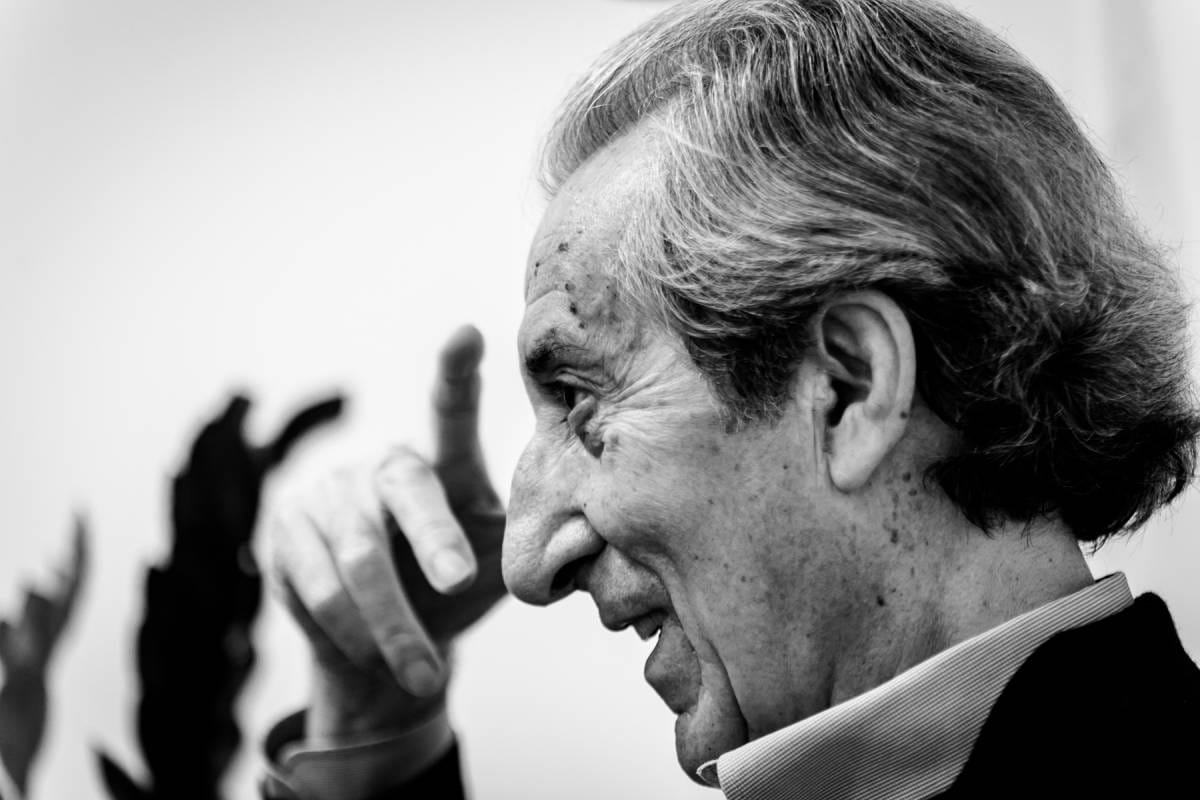
For this reason, the training methodology related to positional play is complex, and at the same time observes the Ser Humano Deportista, following the theory of Paco Seirul·lo, which establishes that the player is a hyper-complex being with several internal structures that interact for a common purpose. This objective is daily coexistence with training sessions that resemble the reality of the game. For this reason, the ability to evolve in positional play is related to the talent, sensitivity, and knowledge of both the player and the coach.
The design of tasks must demand emergent behaviours from the footballer within chaos, training situations that prepare the player for the uncertainty that is a fundamental part of the real game, and where their adaptive capacities are conditioned by unstable situations. The development of open training tasks, in which the coach becomes a co-designer together with the player of the interactions that may emerge spontaneously, requires the coach to be able to adapt to the circumstances of complex and variable training environments.
Training to stimulate a positional play rich in variations must immerse itself in the V3: variability, variety, and variation. Variability is the ability to offer different responses to the same stimulus from different players; this can be observed in a possession game where midfielders offer certain affordances depending on their positioning, while wide players display completely different body behaviours due to their relationship with space and time. Variety is understood as the logical sequence within the training session’s guiding thread, providing internal coherence to the tasks and promoting a meaningful acquisition for the player. Variation refers to how a base task can receive different stimuli through the elements of the game: time, space, direction, number of teammates and opponents, and positioning with and without the ball.
Positional play is fully trainable, and in order to design a training process, it is necessary to recognise which types of preferential simulated situations promote advantages that reduce uncertainty in the real game, creating transferable habits within the chaos of playing in stressful environments.
We begin by defining that a rondo enhances positional superiority, as it establishes tasks focused on body orientation. A possession game is closely related to numerical superiority, finding advantages in numbers between teammates and opponents, and also to socio-affective superiority, as it is a game where space conditions relationships between those who know each other best—feeling and understanding each other. A finishing game highlights qualitative superiority, as it involves individual duels and often two-versus-one situations. When referring to progression games, dynamic superiority is identified, where the design of the task often encourages attacking spaces with advantages. When we refer to tasks that fall within the third and fourth stages of the training session’s guiding thread, we are referring to positional games and situational games that generate a fully positional and qualitative dynamic, due to the rhythm and multidirectionality they offer.
The contributions of researchers in team sports and interdependent systems, such as Natàlia Balagué, Rafel Pol, Carlota Torrents, Scott Kelso, Keith Davids, Duarte, Ángel Ric, and many others, have helped us understand that football remains a complex and interactive act that generates emergent behaviours both in training and in the real game. Reading their work not only makes us better observers, but also better experiencers of the game.
Positional play is what we feel and what we can share.
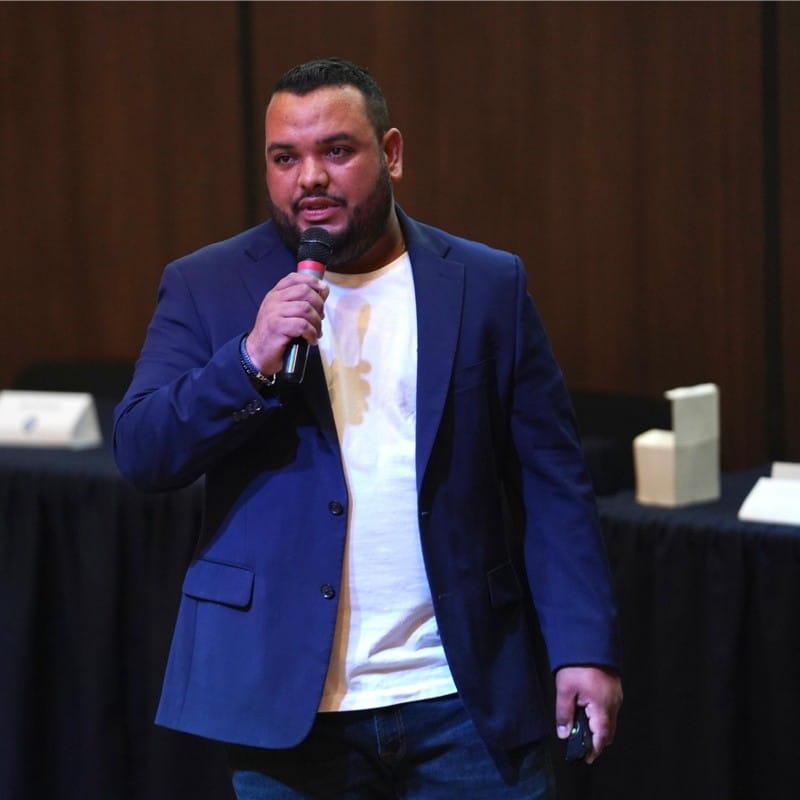
Gaspar Vallecillo Castro works with the Honduran Football Federation as a Technical Development Advisor in FIFA’s TDS program. A professional writer and CONMEBOL PRO licensed coach, he specialises in coach education and in the on-field application of positional play. Follow Gaspar on Twitter and LinkedIn.