The NFL Influence Behind Brazil’s Set-Pieces Strategy

By Rodrigo Seixas
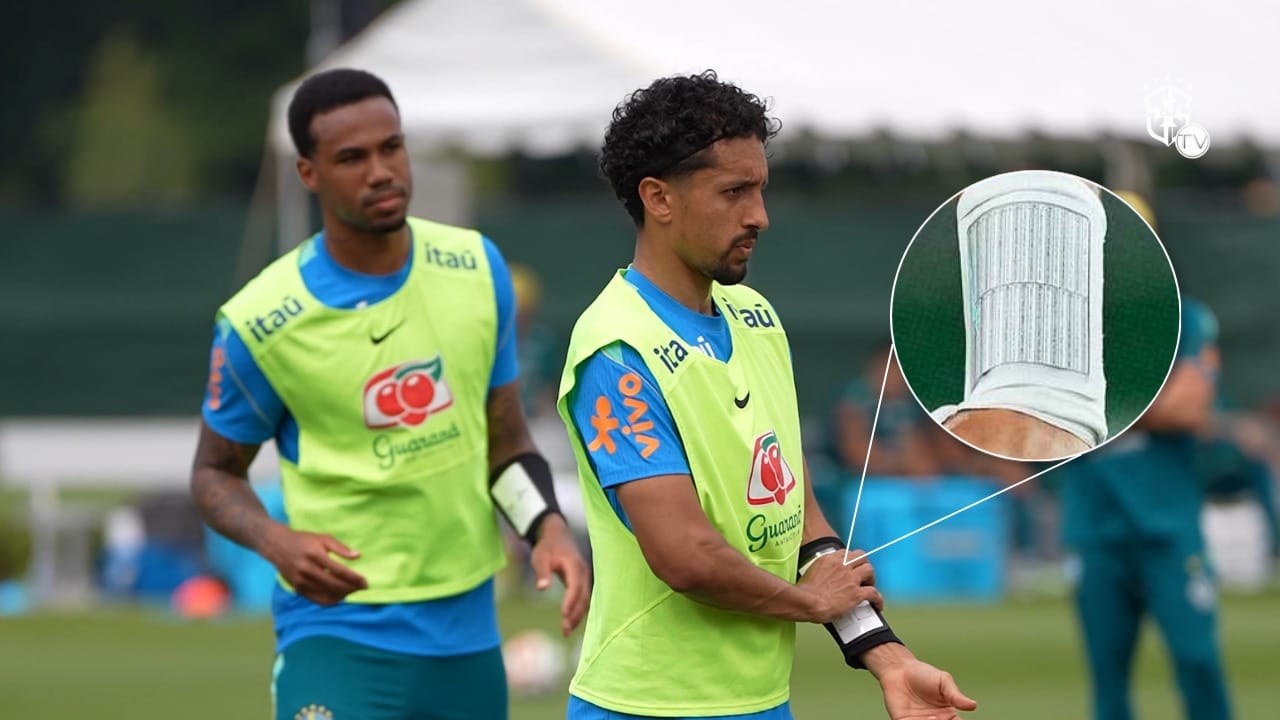
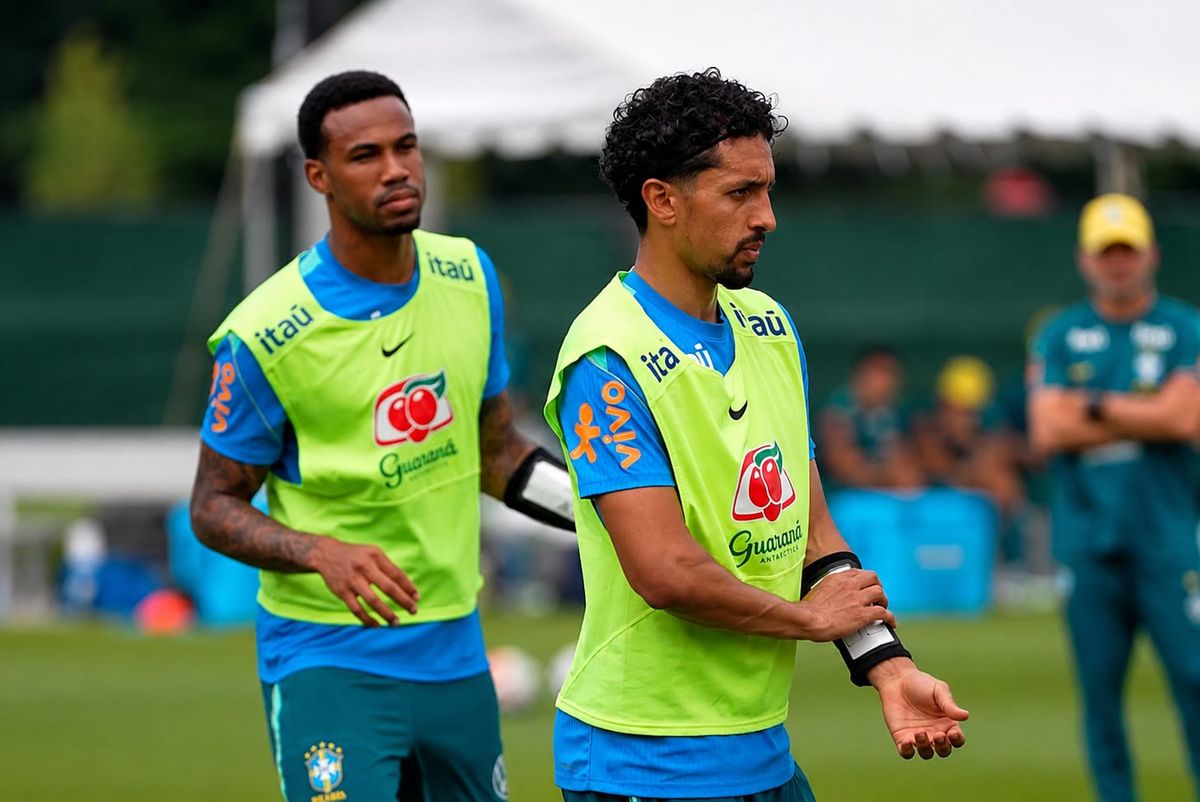
The players of the Brazilian national team used a Playbook Wristband, which is normally used in American football games. In the NFL, the game features hundreds of different pre-designed plays and, before each snap, the quarterback receives an instruction from the coaching staff through the radio system inside his helmet. To avoid calling the entire play, he has a “cheat sheet” on his wrist, which may indicate a type of play such as:
- Run 21
- Pass 34
- X Right 12
There, he has a note of which play it is and, using the wristband, can already organise the team on the field.
© CBF TV
During the Brazilian national team’s training sessions, this equipment was used by centre-backs Marquinhos and Gabriel Magalhães. The objective of head coach Carlo Ancelotti and assistant coach Francesco Mauri (responsible for set-piece situations) was to train set-piece routines more easily.
The accessory is only expected to be used during training sessions and not during matches. Even so, the initiative signals a coaching staff concerned with details and open to incorporating methods from other sports to optimise processes and help players memorise set-piece routines. Brazil has good players in these situations and believes this can become a key advantage during matches.
At the 2022 FIFA World Cup, 44 goals were scored from set-piece situations, representing 25.5% of the 172 goals scored during the tournament. Twenty-six of those goals originated directly from free kicks or corners. This World Cup is expected to follow the same trend. Notice:
Portugal hired Austin MacPhee (Aston Villa’s set-piece specialist) to join its coaching staff. England also organised a training match against Miami United, with the objective of rehearsing tactical plays and practising set-piece situations against an “external” opponent behind closed doors.
Play diagrams in American football (NFL) are usually presented in this way, indicating the movements players make on the field. This is an example of a defensive play.
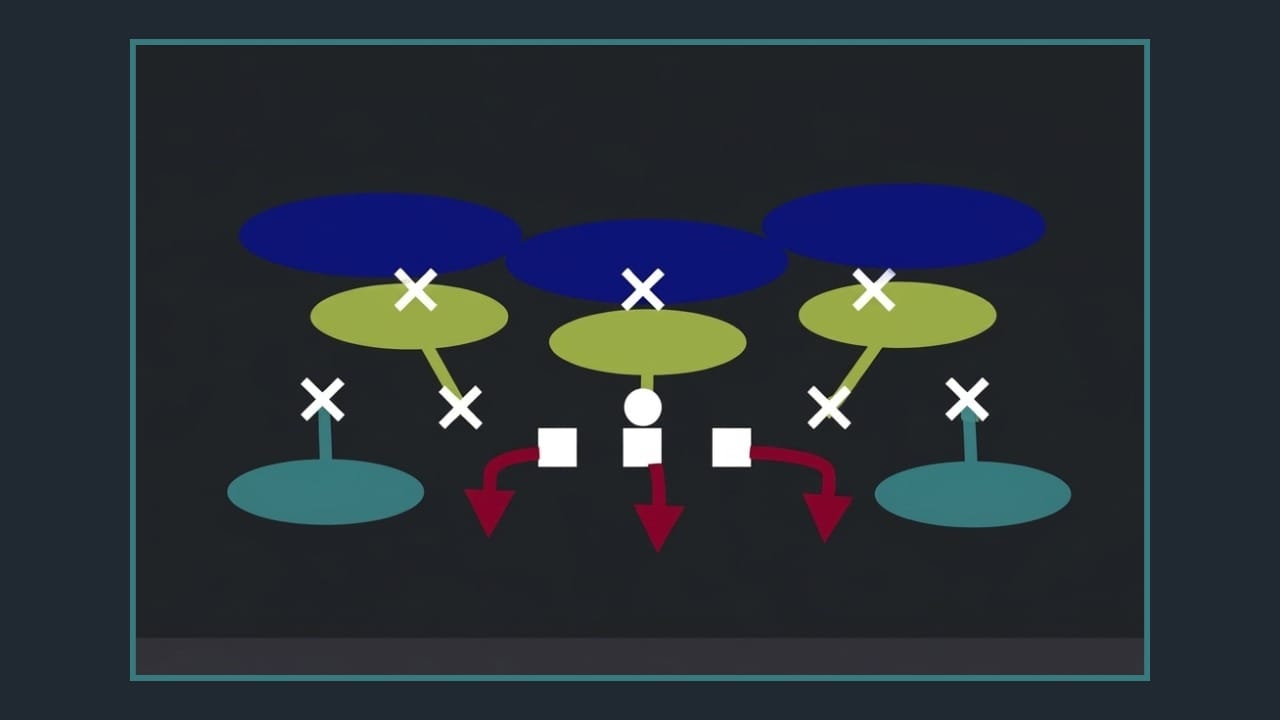
Blue
- Three deep areas of the field (deep thirds)
- Each defender covers one-third of the field in depth
- Objective: prevent deep passes
Yellow
- Covers the middle of the field in short zones
- Objective: prevent quick, short passes
Green
- Responsible for the short wide areas
Red
- The players indicated by the arrows are responsible for containing the quarterback
This type of tactical diagram in football is more commonly used to illustrate set-piece situations. However, I believe it can also be used during open play. I believe it is a useful indicator of the areas each player needs to cover, for example.
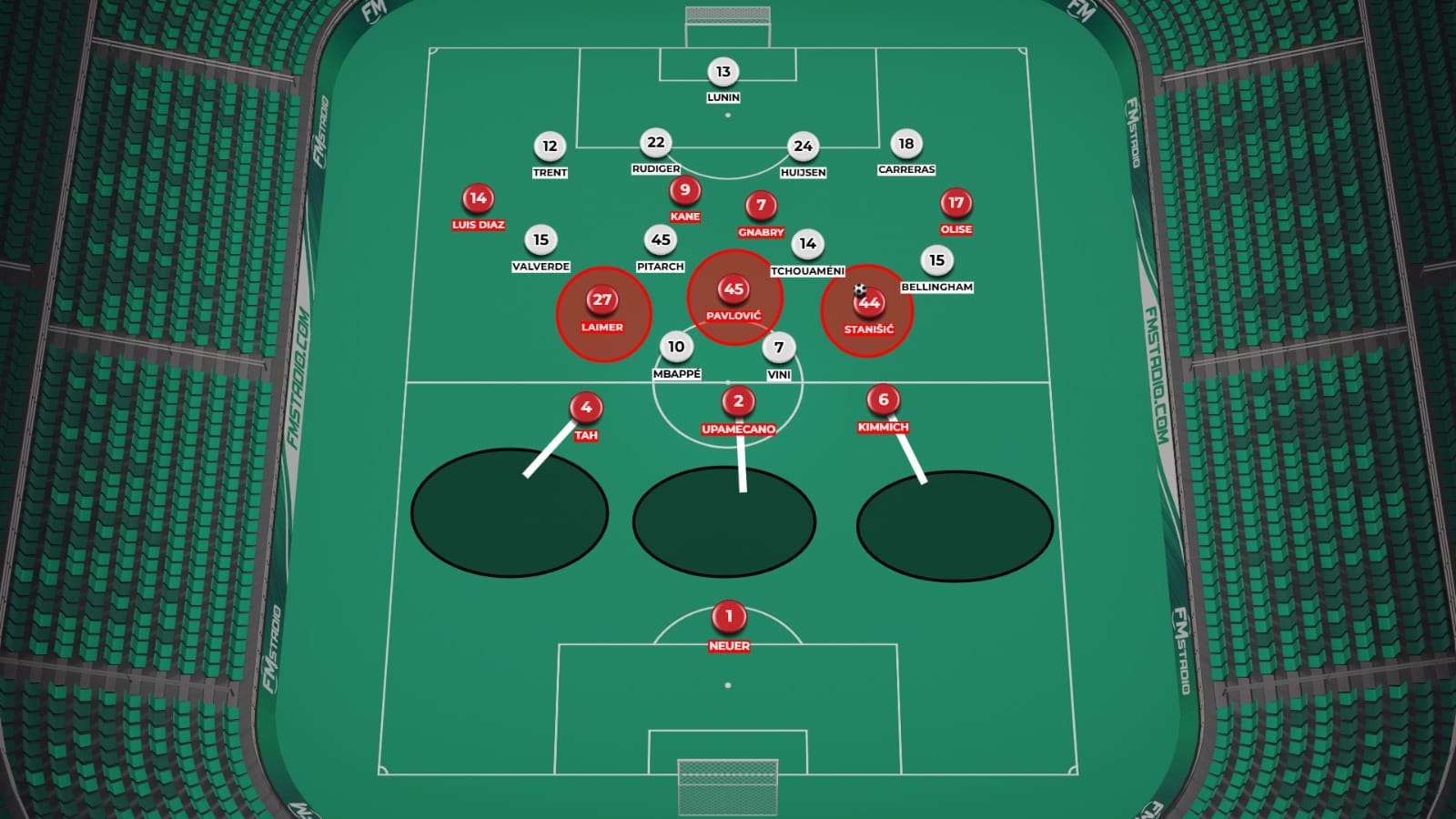
As in this example, where the spaces are marked and the areas players need to protect are indicated. In black, the depth zones; in red, the space between the lines.
This interconnection between sports can be beneficial, taking concepts from a different sport and applying them to training sessions, instructions, helping to explain certain situations or ways of behaving on the field. Just as Joe Mazzulla and Pep Guardiola maintain a friendship and exchange ideas about basketball and football.
Football can grow tremendously by seeking inspiration from other sports.