PSG’s Road to Glory: The Realisation of a Collective Idea

By Rodrigo Seixas
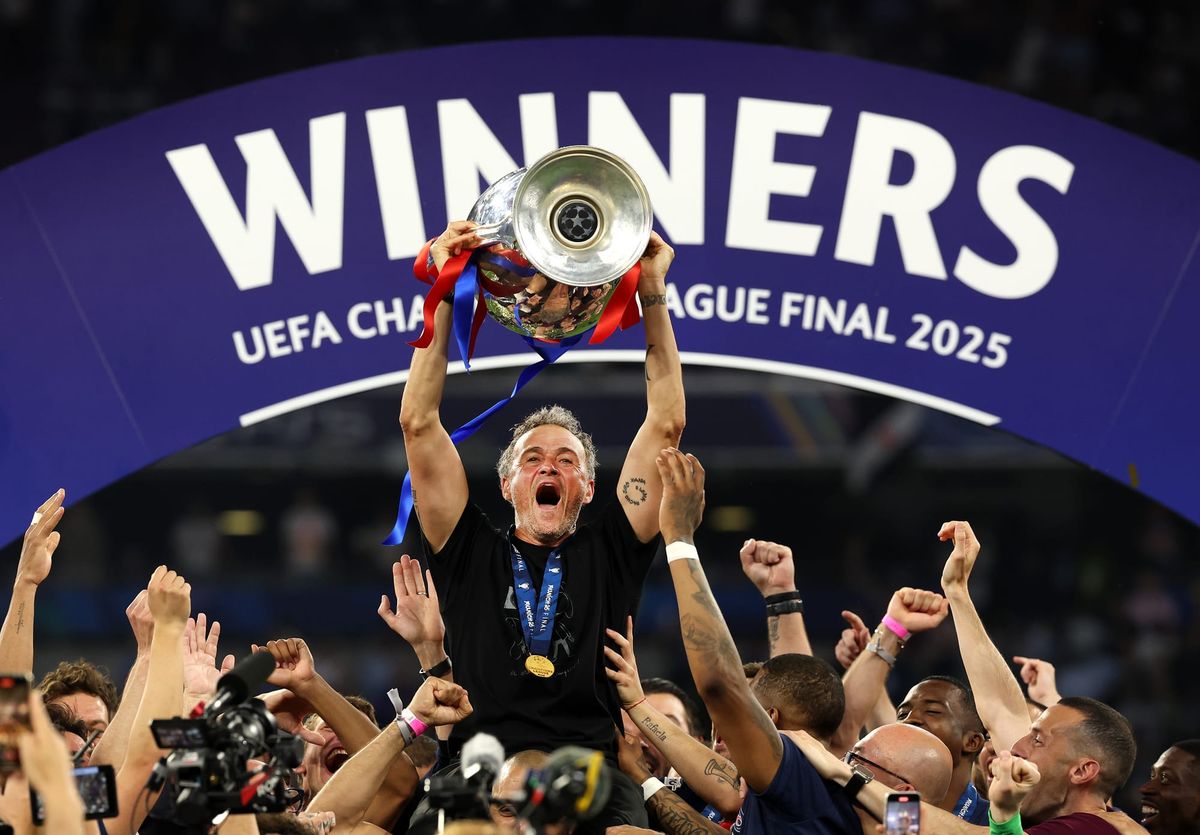
Last weekend, the UEFA Champions League was won by Paris Saint-Germain. A club that had dreamed of this title for years and invested heavily to achieve it. Some of the greatest stars in world football passed through Paris, including Messi, Neymar, Mbappé, Ibrahimović, and many others.
Yet the moment of triumph arrived when PSG relied less on individual names and more on a sporting project. A clear game model, a squad built to execute it, and a coach capable of leading the process: Luis Enrique. Through positional play and the innovations he gradually incorporated into the team, PSG remained dominant in domestic competitions and finally secured the long-awaited continental title. And they did so while playing excellent football.
In the final, played in Budapest against Arsenal, the challenge was enormous. Mikel Arteta’s side, understanding that they were facing a very strong opponent, opted to take fewer risks. Arsenal lined up in a 4-4-2 base structure, with more defensive-minded full-backs and highly compact defensive lines.
At several moments, every Arsenal player was positioned behind the ball within a space of less than 15 metres. Unlike other opponents who opted for individual marking against PSG, the English side chose to defend zonally, closing off the most dangerous areas of the pitch.
Notice how Arsenal defend in an extremely compact zonal structure, making chance creation very difficult for PSG.
The plan was helped by an early goal. Kai Havertz attacked the space behind the defence and capitalised on a deflected ball that fell kindly into his path. With PSG pressing high, there was plenty of open field for the German forward to carry the ball and finish. He took advantage of the opportunity and opened the scoring.
Arteta’s strategy also differed from the one used by Inter last season. While the Italians defended in a 5-3-2 and frequently left the wide corridors in one-versus-one situations, Arsenal consistently kept the winger helping the full-back in defensive situations.
In addition, the English side exchanged very few passes and relied heavily on direct play. Goalkeeper David Raya completed 37 passes during the match, 35 of which were long balls. Arsenal finished the game with only 25% possession. Arteta preferred not to take risks in the build-up phase and avoided exposing his team to the French side’s pressure near their own penalty area.
All of this reduced the available space for PSG’s wingers. They were almost constantly confronted by double teams. Even Dembélé’s movements, dropping deep to receive and attract defenders, had little effect. He barely attempted them during the match because Arsenal’s marking was based on zonal references. The result was a first half with very limited attacking production from the French side, generating only 0.23 xG and going into the break trailing.
In the second half, however, an important change took place. It was linked to a common principle among teams that use positional play and concerns the positioning of players within the so-called rest defence. If the opponent does not keep attackers or wingers constantly threatening transition spaces, there is no need to allocate so many players to protecting those areas. More players can therefore be committed to the attack.
That is exactly what Luis Enrique did. Watch the video.
Notice how PSG changed in the second half by adding one more player to the attacking line.
During the first half, PSG attacked in a 3-1-6 structure. In the second half, they shifted into a 2-1-7. The numerical superiority Arsenal had previously enjoyed out wide, creating situations of four-versus-three and even five-versus-three, lost much of its effectiveness as PSG managed to achieve numerical equality. It was precisely from one of these situations that Kvaratskhelia created the action leading to the penalty. Dembélé converted the spot-kick and levelled the match.
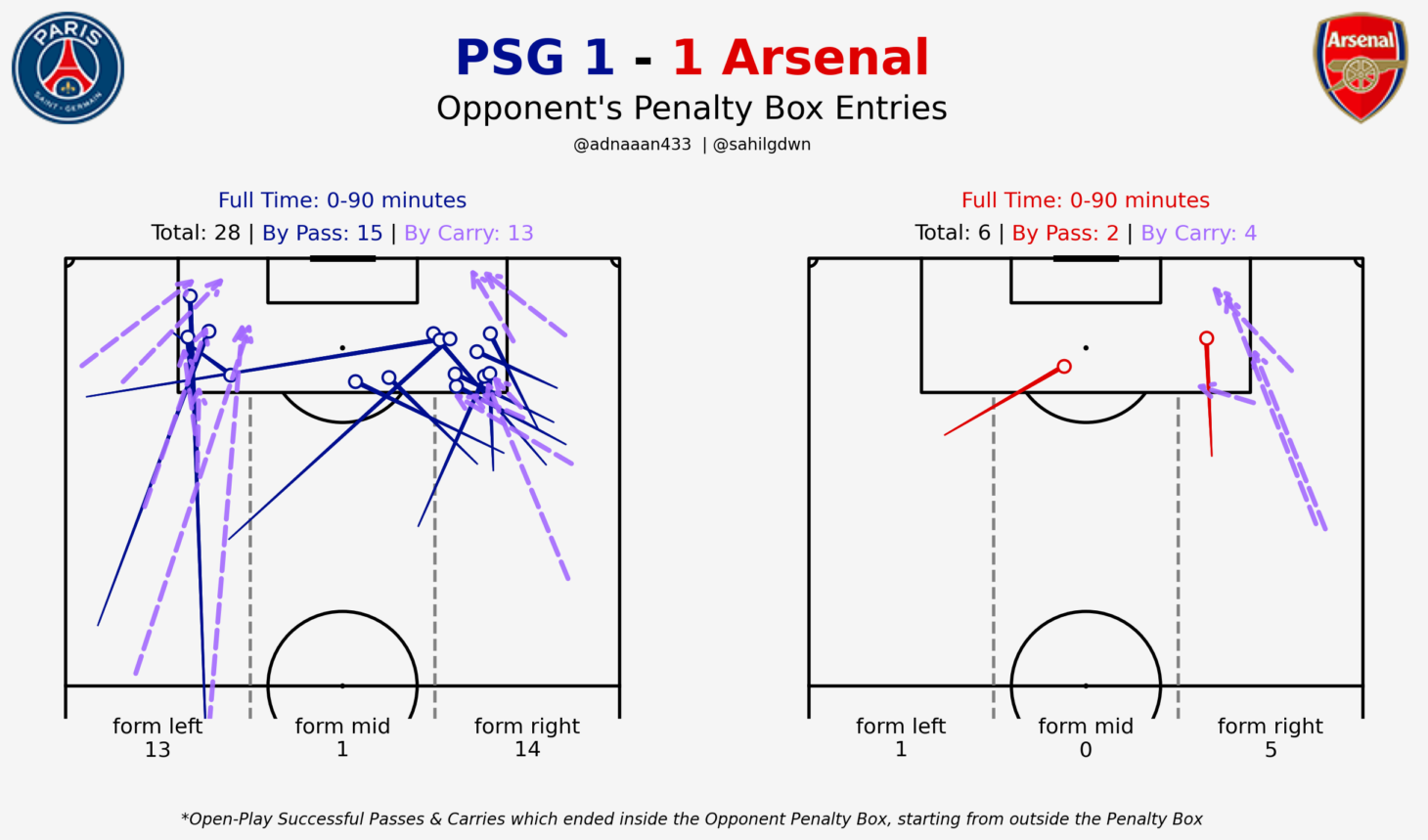
After the equaliser, PSG gradually returned to their 3-1-6 structure, while Arsenal began to push slightly higher in search of a winning goal. Within this context, Barcola was released twice into the space behind the English defence and came very close to scoring.
During extra time, both teams became more cautious. The match grew increasingly tense and was ultimately decided by penalties. At that moment, PSG demonstrated the confidence of their players, converting their spot-kicks more effectively and securing the title.
It was a final in which Arsenal chose to minimise risk and, because of that approach, managed to take the game all the way to penalties. PSG, on the other hand, accepted risk at specific moments of the match, pushed their structure higher, and found the route to an equaliser that kept their hopes alive. In the end, they were rewarded with victory.
Throughout their Champions League campaign, PSG displayed different facets of their game. They proved they could defeat teams such as Bayern Munich in open matches full of chances. They also demonstrated the ability to neutralise powerful attacks when required, as they did against Bayern in Munich. And against an extremely conservative Arsenal side, they found solutions to overcome a completely different context.
More than a sporting achievement, this title represents the success of a project. PSG stopped relying exclusively on star players and instead placed its faith in a collective footballing idea. Luis Enrique’s work proved to be successful, influential, and capable of becoming a reference point for many other clubs in the years to come.