The Rise of Cesc: Analyzing Fàbregas’ Como

By Edward Stratmann
Cesc Fàbregas’ Como 1907 have taken Europe by storm this season with their scintillating brand of tactically sophisticated, expansive football.
Unquestionably one of the most exciting and entertaining teams to watch in Serie A, there’s been plenty of upside to be extracted from the work done by the legendary Spaniard, who enjoyed a remarkable playing career at elite clubs like Arsenal, Barcelona, Chelsea and AS Monaco.
Making waves with their innovative and ambitious approach, the way Fàbregas has implemented his complex philosophy deserves tremendous praise, as he’s got this young Como side playing in his image. They’ve been full of energy, intensity, aggression and intelligence both in and out of possession.
To start with their output in possession, it’s been a joy to watch them execute his demands in this phase, with their interesting movement patterns, frameworks and variations ensuring they’ve been a nightmare to contain.
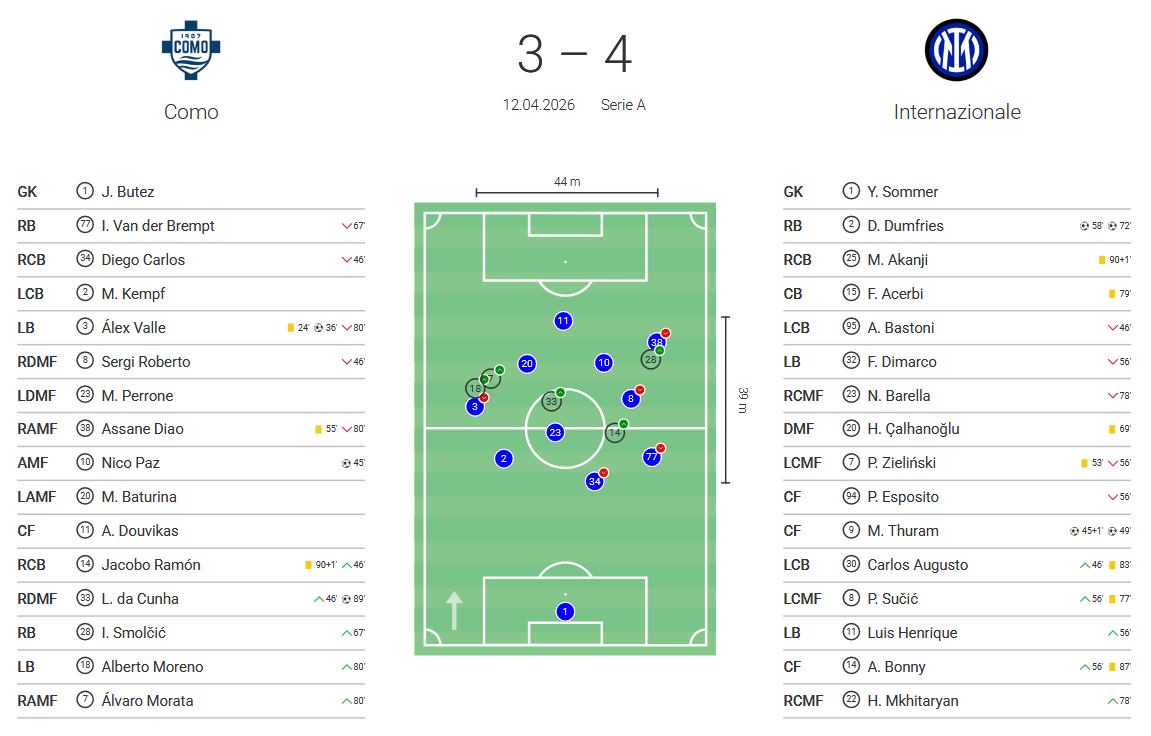
Nominally setting up in a 4-2-3-1, Como frequently morph into a 4-3-3, 4-2-2-2 or even back-three structures depending on the fixture. This fluidity is central to their unpredictability and capacity to find solutions, as their base formation is merely a starting point before evolving into a variety of positional rotations and sequences within Fàbregas’ plans that are predominantly positional but also feature elements of relationism.
Their intricate build-up play has been especially eye-catching. Fàbregas encourages his side to invite pressure to bait the opposition before slicing through them. Centre-backs split wide to increase the pressing distances for the opposition’s first line, midfielders drop cleverly to offer central options and goalkeeper Jean Butez instigates attacks with aplomb, as they’ve controlled and dictated games with authority.
Their use of third-man combinations is particularly effective in beating pressure, as their staggered support structures ensure that the ball carrier always has a host of outlets. Having defenders and midfielders that are so comfortable on the ball in these situations, such as Jacobo Ramón, Diego Carlos, Máximo Perrone and Sergi Roberto, certainly adds to their aptitude in this regard.
To further touch on the influence of Butez between the posts, he’s been so instrumental, as he acts as the perfect playmaker to quarterback attacks and fits Fàbregas’ demands for this position superbly. So technically secure and press-resistant, he’s been vital towards provoking and bypassing the press, holding his nerve and then pinpointing the free man with real clarity. His calm and composed work in possession has carried huge strategic value, with him essentially acting as an extra outfield player.
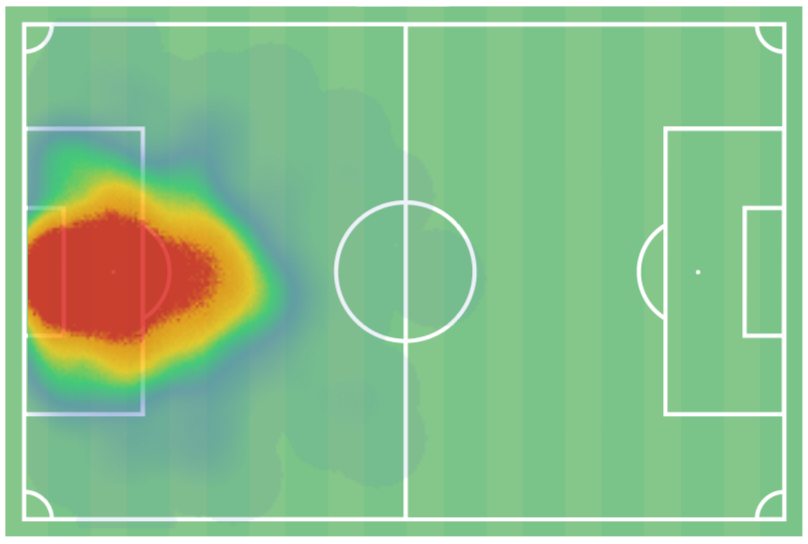
Excelling at identifying and finding the spare man through either short combinations, medium-range progression or longer switches, Como’s ability to not only manipulate defensive blocks but also slice past them is outstanding.
Moreover, at times they leave just Butez and the central defenders to build up while they push the rest of the team up the pitch near halfway, which underlines the faith and belief the 38-year-old Fàbregas has in his players to fulfil his demands.
Another defining feature of Como’s offensive efforts comes in the form of their relentless, intelligent and dynamic rotations. Executed coherently and with precision, their dovetailing has elevated their capacity to carve open defences.
Their talented full-backs, like Alex Valle, Ivan Smolčić, Alberto Moreno and Mërgim Vojvoda, regularly underlap centrally or even advance into attacking midfield positions. In response, wingers such as Assane Diao, Martin Baturina, Jesus Rodriguez, Jayden Addai and Nicolas Kuhn will edge inside to fill a central midfield station, while central midfielders pull into full-back zones. This constant interchanging that features many permutations to disorganise defences has proven particularly fruitful against man-marking systems.
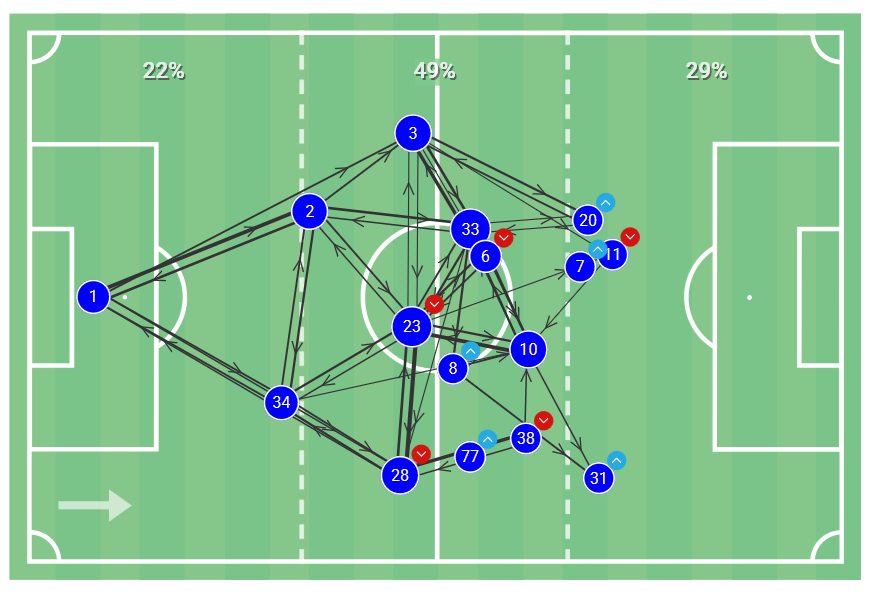
Consistently unearthing new passing lanes and dragging adversaries, these layered movements effectively create overloads, draw opponents out of position and open space in damaging areas.
Crucially, these rotations are supremely coordinated and choreographed. Players maintain close proximity in key regions, allowing for sharp interplay, third-man runs and forward-facing receptions that keep attacking momentum flowing.
It’s worth noting how one of the wingers, such as Baturina, will often venture centrally to give them an extra number to progress in the 10 spaces, tilt the shape asymmetrically and attract a marker infield to generate room wide for his full-back, as this wrinkle adds to their nuisance.
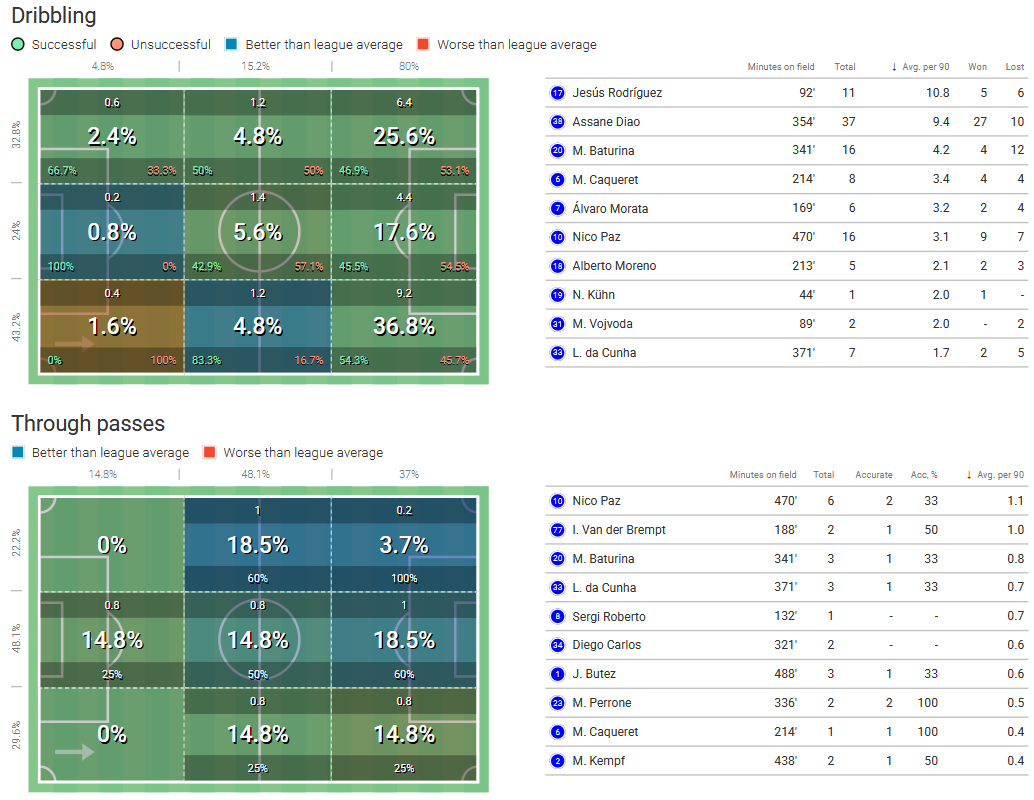
While Como are content constructing patiently, they are equally capable of accelerating attacks swiftly. Their ability to shift the tempo from controlled circulation to direct vertical attacks makes them extremely tough to combat.
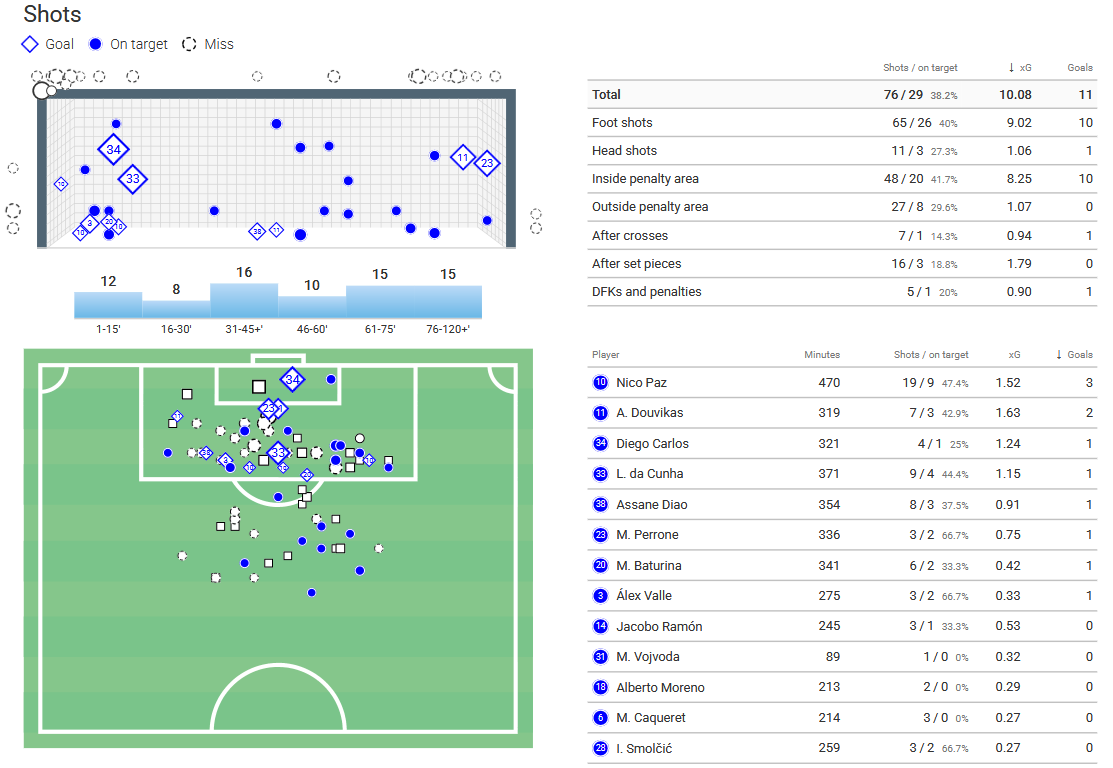
They persistently threaten depth courtesy of well-timed runs, most notably from striker Anastasios Douvikas, whose movement in behind stretches defensive lines, helps pin trackers and manufactures space between the lines. This, in turn, allows players like Nico Paz to operate in dangerous pockets, where he’s a constant creative and goalscoring weapon, and lets the wingers maximise their one-on-one prowess.
In addition, their use of astute counter-movements, when a striker or winger drops deep and a teammate surges into the newly vacated space, has been another valuable element of their attacking play to heighten their ability to dismantle defensive units.
Paz, in particular, is a standout. Given the freedom to roam between lines, drift wide or check deeper, he’s connected attacks expertly. His technical quality, vision and expertise in tight spaces have guaranteed he’s been a true difference-maker for Champions League-chasing Como.
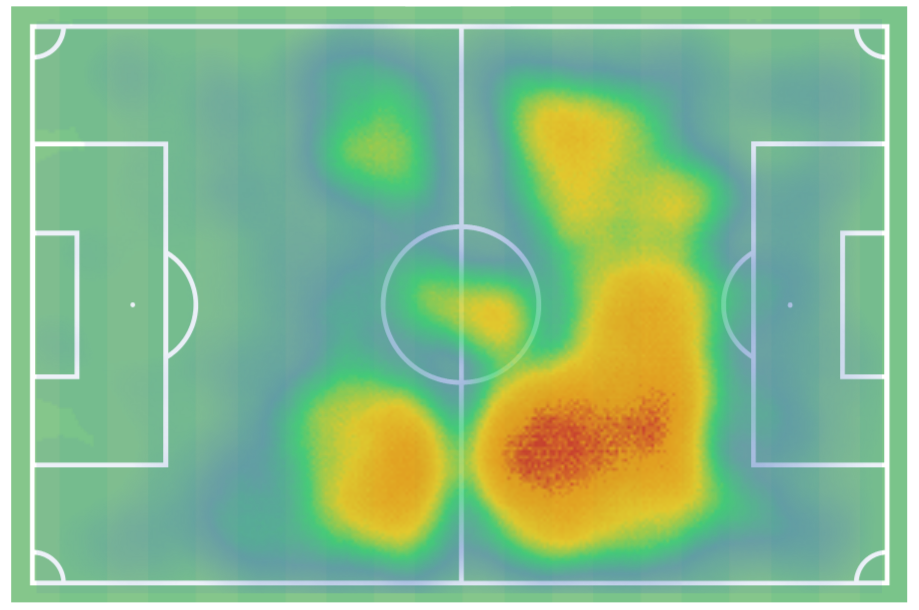
Midfielders such as Perrone and Sergi Roberto provide balance, combining smarts, scanning and positional awareness with the ability to control proceedings, while Maxence Caqueret and Lucas Da Cunha typically get higher and impact the final third to a greater extent, with Da Cunha’s penetrative upfield bursts into the final especially notable to arrive undetected.
Once in advanced areas, they flood the box with runners arriving at different heights and depths to exploit the near or far post, plus take advantage of the blindside of defences and occupy central zones to amplify their menace.
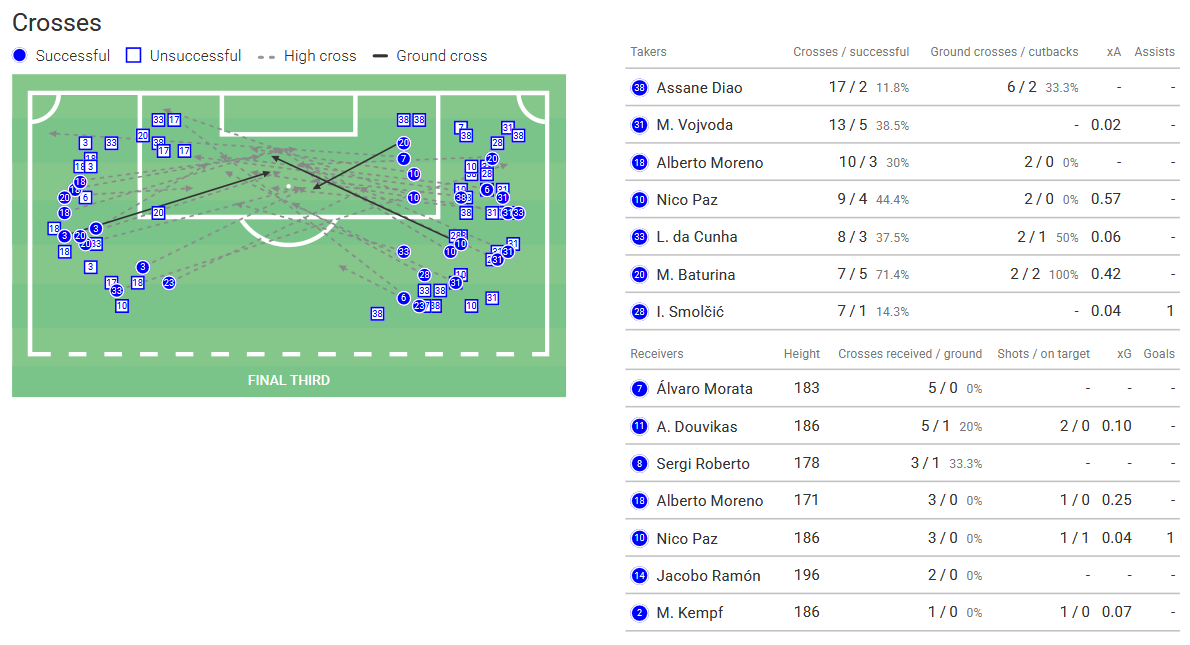
They’re well-drilled in second-ball scenarios when they can’t beat the press, where they position multiple players around the ball to recover possession quickly and sustain attacks, with an intriguing aspect being how one of the full-backs helps overload the ball’s drop zone with out-to-in movements to assist in regaining possession high to attack again.
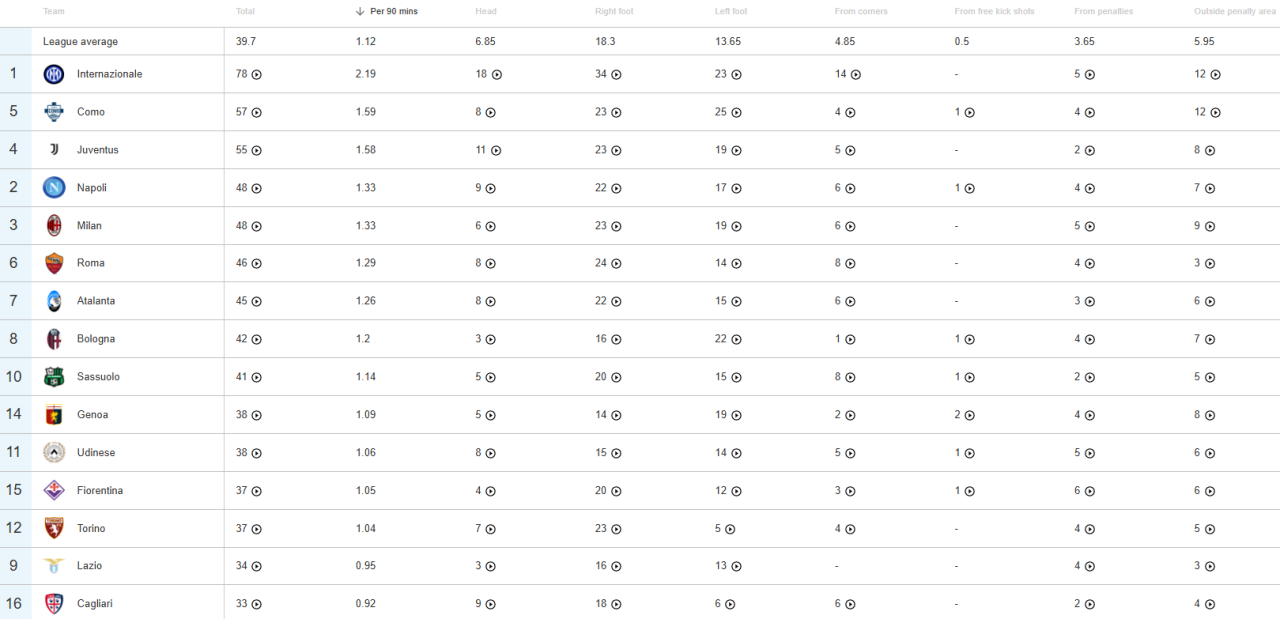
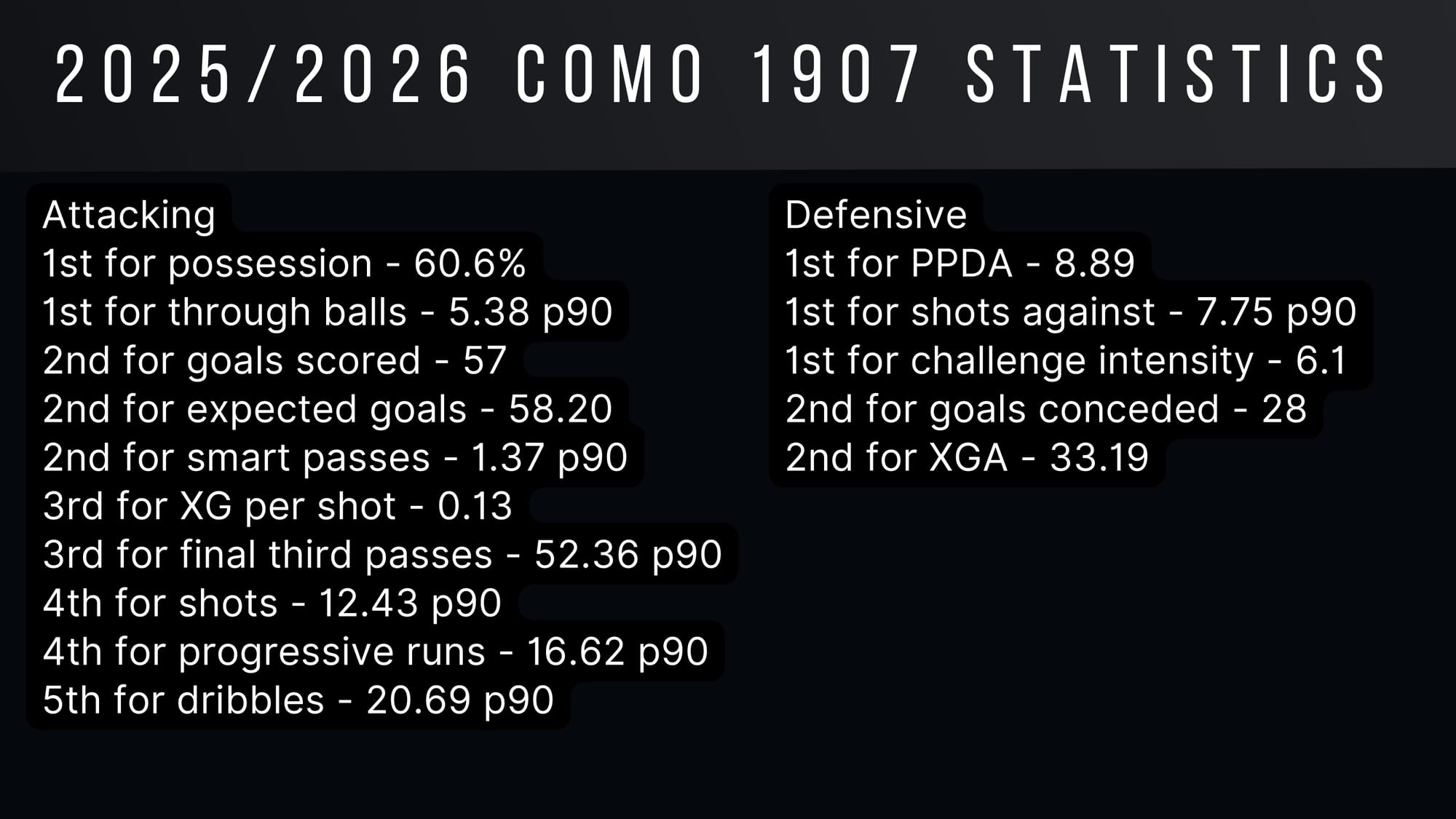
Topping the league for possession, through balls and second for goals scored and expected goals, these numbers highlight the success of their approach aptly.
Despite their expansive attacking plans, Como haven’t let this hurt them defensively.
Brilliant exponents of the high press, Como’s ability to cut off passing routes using their cover shadows, shift collectively and minimise opponents’ time and space in possession makes them so difficult to play through. Also masters at using the touchline as an extra defender to force rivals wide and responding crisply to triggers, such as foes dropping with their back to goal and backward, wide or lateral passes, this is another hallmark of their assertive and synchronised harrying.
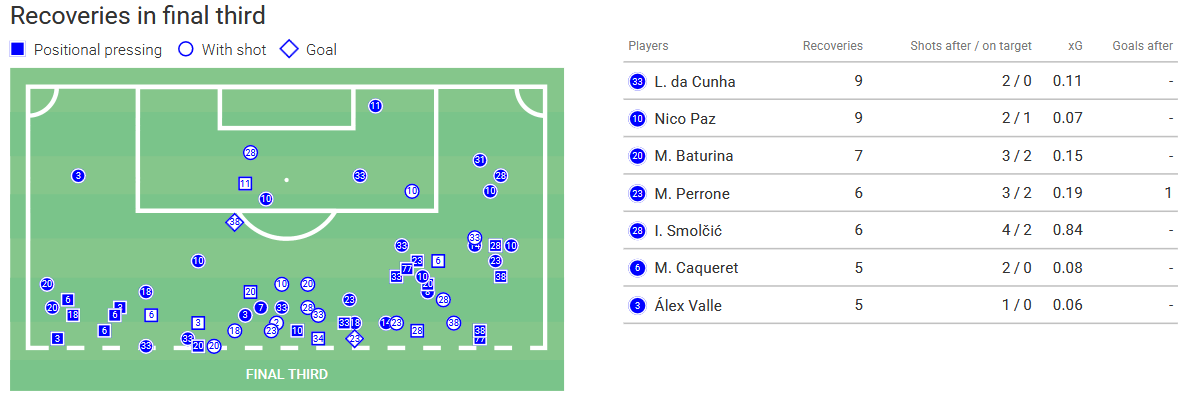
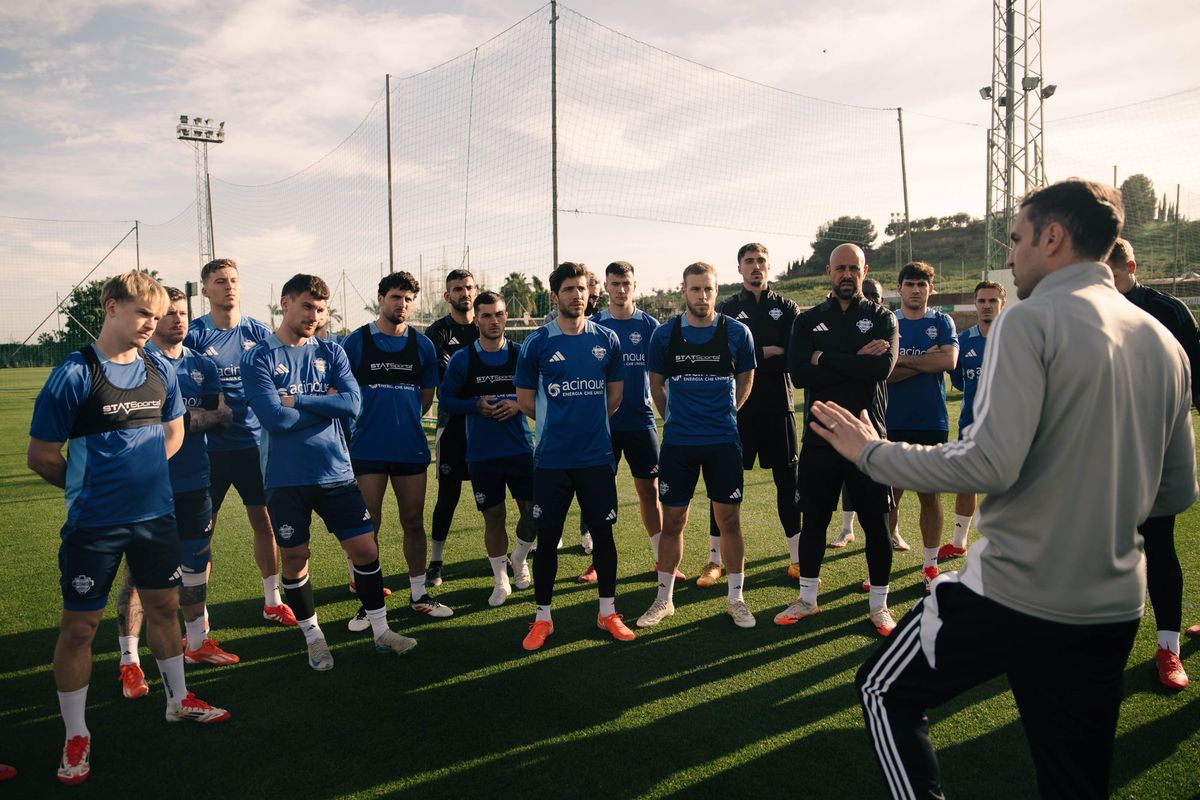
It’s worth mentioning how players scan regularly to maintain awareness and adjust their positioning to shut off options, with Fàbregas and his coaching staff clearly putting in the work on the training ground to get these details dialled.
They counterpress aggressively immediately after losing possession as well, using it both as a defensive mechanism and an attacking asset to conjure chances.
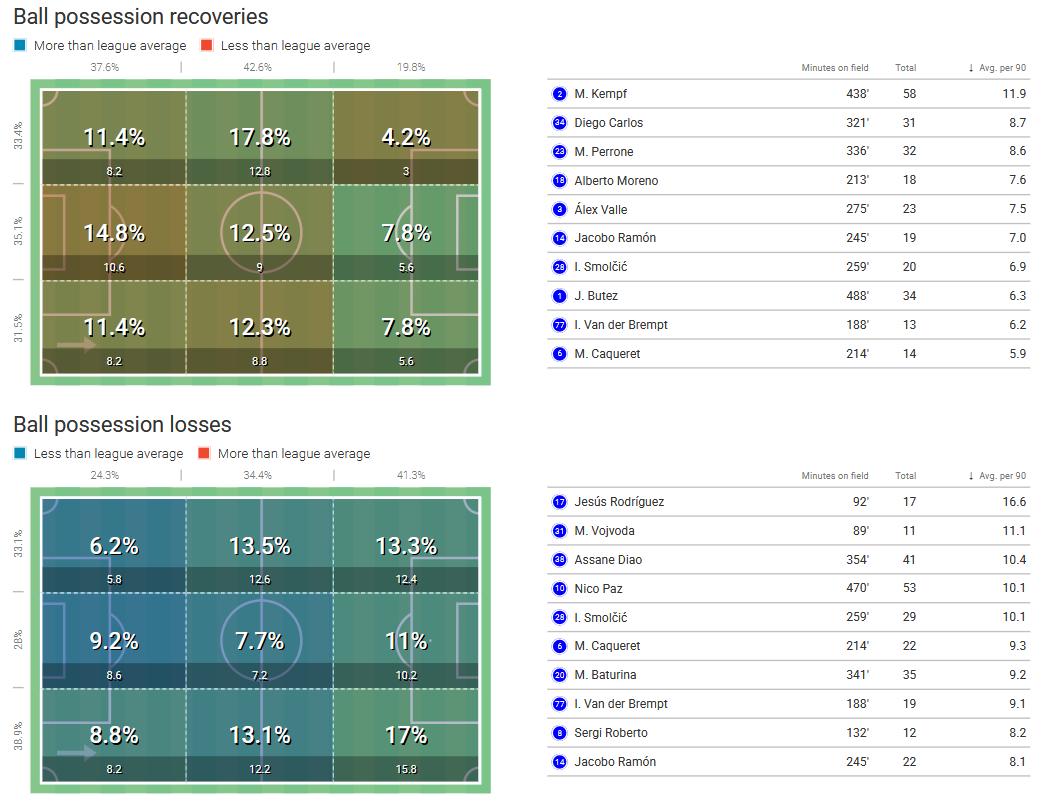
Importantly, their rest defence is generally well-structured, enabling them to deal with transitions and tenaciously swarm opponents to make high regains to rapidly attack again vs unset teams looking to spring forward themselves. Although there are moments where their attacking commitment leaves them vulnerable if too many players are caught ahead of the ball, the positives far outweigh any negatives.
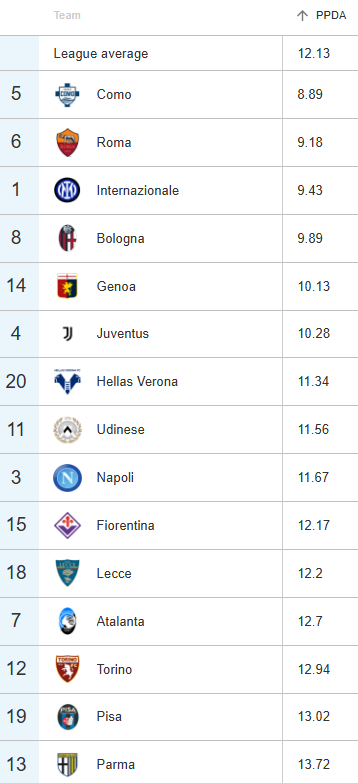
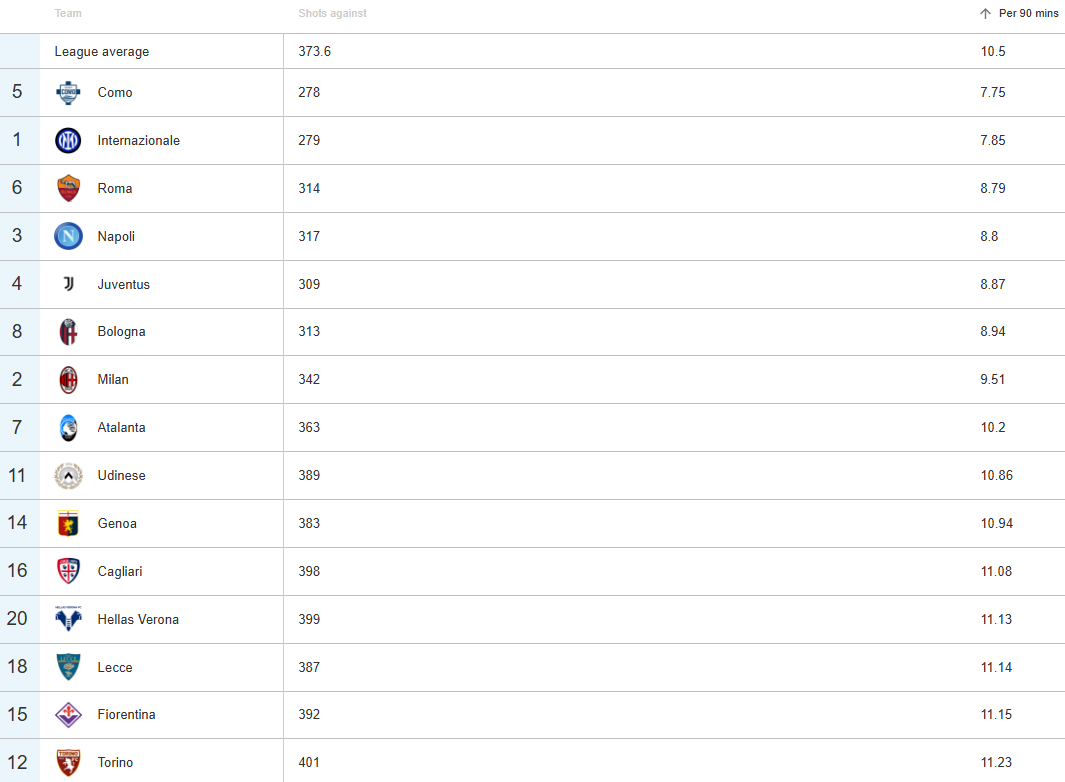
The fact they rank first in Serie A for PPDA, shots against and challenge intensity, plus are second for goals conceded and expected goals against serves as a testament to their defensive excellence.
There are still areas for growth, however, as their inexperience shows occasionally, particularly in terms of game management, where matches can become chaotic. But Fàbregas is happy to take on these risks as a consequence of his system’s principles.
All in all, it’s been mightily impressive how Fàbregas has built a tactically flexible and cohesive side capable of punishing opponents in an array of manners, with their blend of positional intelligence, technical wizardry, attacking ambition and stopping class making them one of the most compelling teams in the world right now.
There’s no question Como are building something truly special with their bold, fearless and innovative style under Fàbregas. Achieving European qualification feels like a natural next step for this refreshing and thrilling side, which would be an ideal reward for the serious momentum this captivating project is gathering as they continue to go from strength to strength.