Claudio Giráldez’s Celta: Building a European Dream


By Emanuele Mongiardo
The centenary season was on the verge of turning into a nightmare for Celta Vigo. Two years ago, the Galician club had decided to do things in a big way to celebrate its hundred years of history. With the hope of once again competing for European places, the club had chosen to rely on one of the most prestigious coaches in the history of Spanish football, Rafa Benítez.
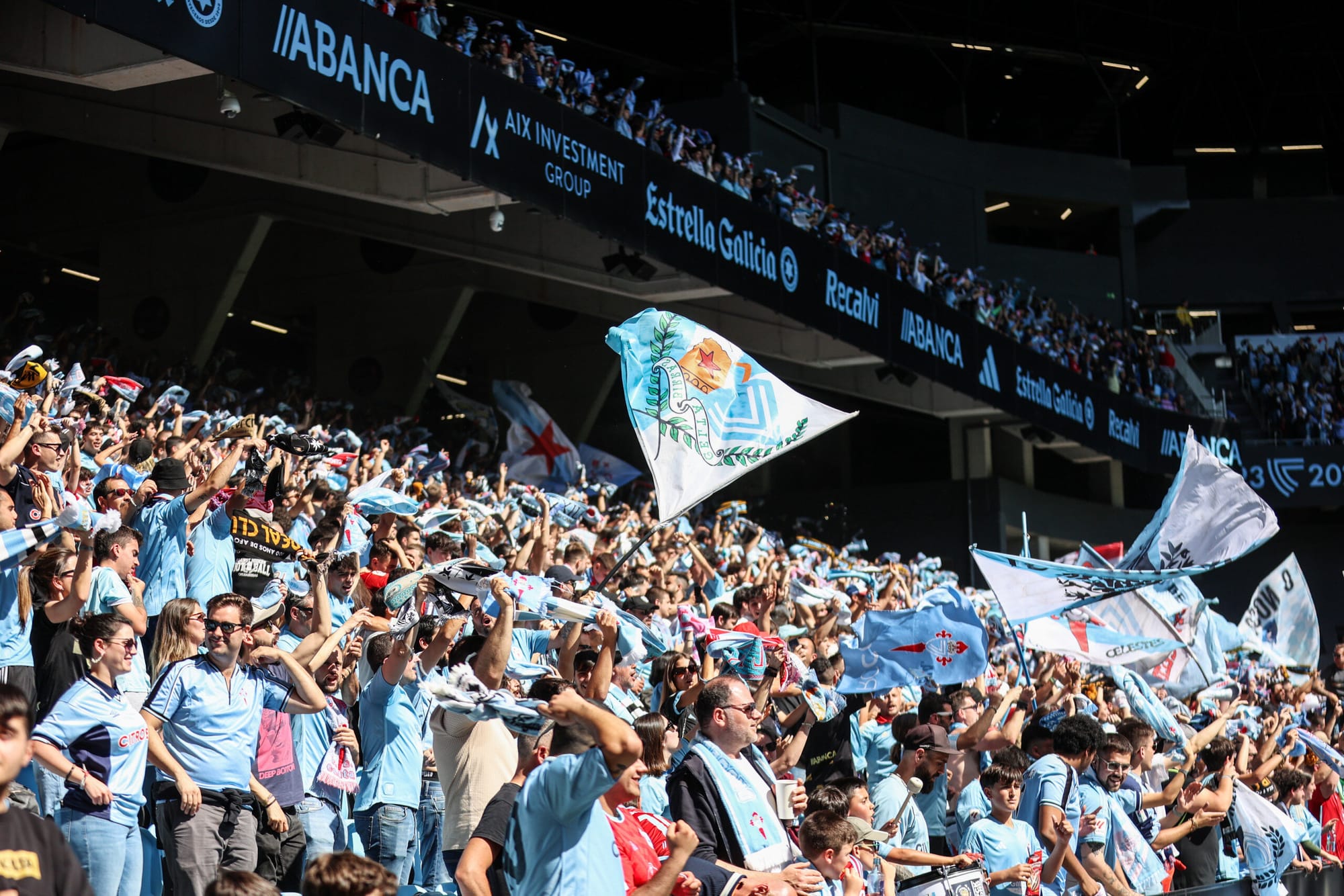
Benítez was meant to be the guarantor of Celta’s renewed ambitions, but reality proved far harsher than expected. Not only did the team perform below expectations, but it ended up in 17th place, caught in the turmoil of the relegation zone.
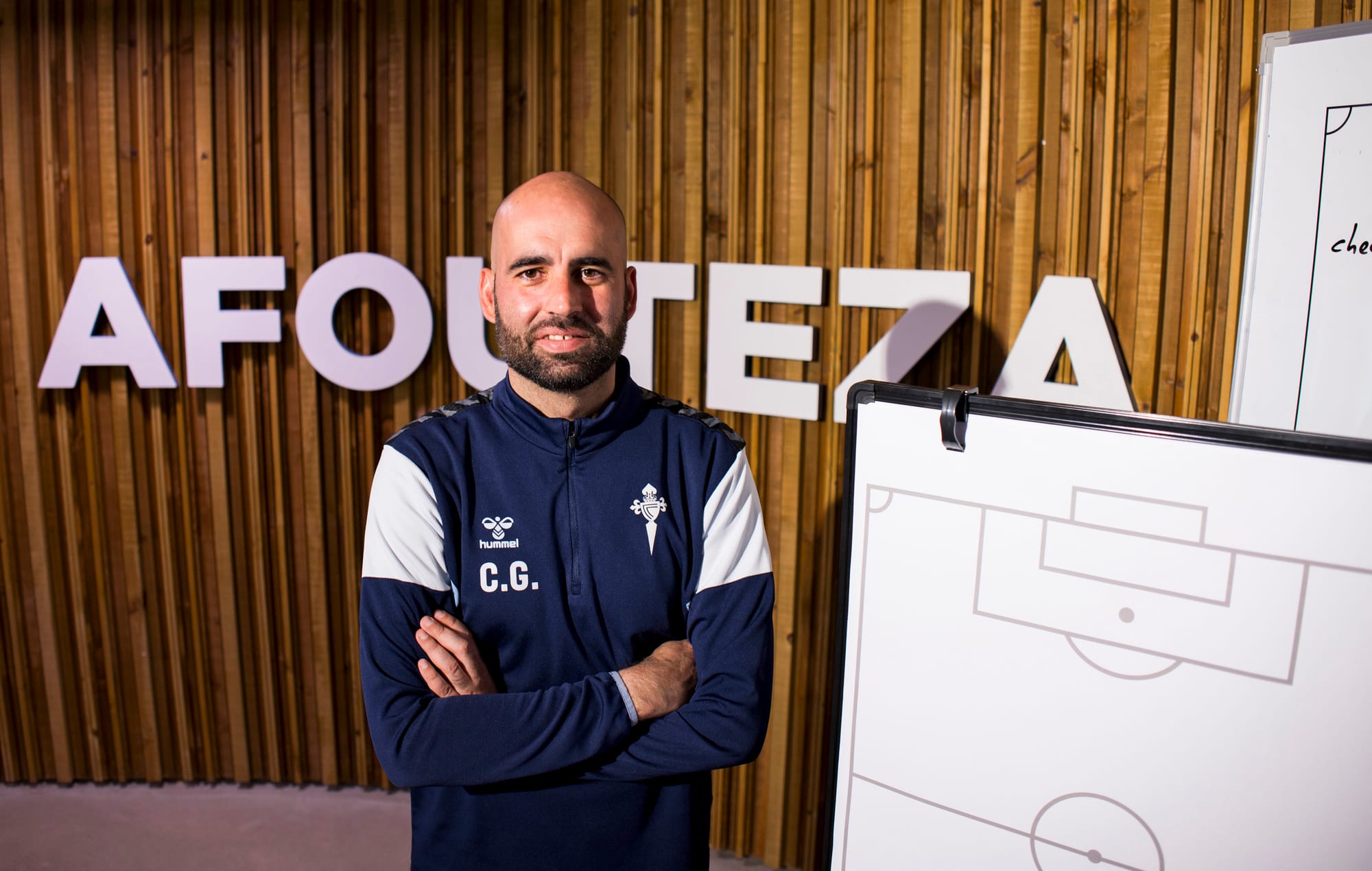
In such cases, when a turning point is needed, clubs usually turn to experienced coaches, specialists in survival battles, capable of steering the ship back to shore. Counterintuitively, however, Celta chose Claudio Giráldez, 36 at the time, and from the very beginning, no one saw it as a risky decision. This is because Giráldez’s name had long been a certainty within the Celta environment.
Discussions about identity and DNA in football often turn out to be empty, useful only to perpetuate clichés. It is difficult to argue that a team can have a single, innate way of interpreting the game. It is more concrete, instead, to observe how a club usually operates and what type of player it prefers. With these premises, it makes more sense to identify the essence of a club with a certain style of play.
Giráldez, then, was truly the best choice to put Celta back on track: the right man for a club that has always relied on academy products and that possessed a squad full of players inclined toward ball dominance. Giráldez not only advocated a style suited to the squad, but had also spent his entire coaching career within the Galician club, first in the youth teams and then with Celta Fortuna. He knew which buttons to press to recover the squad and which resources from the academy and second team to draw upon.
The result was a comfortable survival in the first season, followed by qualification for the Europa League in the following one. Today, Celta—sixth and just two points away from fifth place, which could mean Champions League qualification—is a solid presence in La Liga, and Giráldez one of the most interesting coaches in the Spanish landscape.

It had not been since the days of Luis Enrique or Toto Berizzo that Balaídos had experienced such an exciting period. Not coincidentally, two other cycles with a strongly offensive identity, albeit in different ways.
But what are the secrets of the Galicians?
If we had to label Giráldez’s Celta, we could say it is a positional play with distinctly vertical nuances. According to WhoScored, Celta ranks only 7th in La Liga for possession percentage (52%). However, the fact that they are also the fourth-best team in the Spanish league for passing accuracy (86.8% completed passes) reveals the quality of their playing directions.
The starting point is a 3-2-4-1, in which build-up is handled by the three centre-backs and the two holding midfielders. In general, not only between defence and midfield, it is difficult to identify a fixed starting eleven at Celta Vigo. Giráldez likes to rotate his players, especially in midfield. While individual characteristics modify the game in its nuances, there are shared principles to rely on at all times: the desire to build in an orderly manner while manipulating opponents, whether over short or longer distances; the idea of shifting opponents from one side to the other; the occupation of width and the consequent attack of space behind the defence.
In build-up, of course, Celta varies its choices depending on the opponent’s behaviour. If pressed aggressively or in numerical equality, they can also choose to play more directly.
Against such an approach, it is usually more difficult to progress through the centre, so Celta can go wide, with the wing-backs staying slightly deeper to help in build-up. In this phase, the high quality of the usual starters on the flanks makes the difference: Óscar Mingueza and Sergio Carreira. Neither is a classic wing-back. Rather, they are full-backs or wide players with genuine playmaking qualities, capable of carrying the ball inside or delivering it diagonally into central areas. The former Barcelona player, in particular, often plays inverted on the left, making it natural for him to move toward central zones. If opponents are aggressive, Mingueza and Carreira are tasked with orienting themselves inside and playing diagonally to a striker dropping short.
Support movements against aggressive opponents are particularly effective when the striker is Borja Iglesias, the most physically dominant among Giráldez’s forwards. “The Panda” not only provides a reference point, thanks to his ability to protect the ball and link play, but also creates space for the two attacking midfielders, who can run beyond him.
Footage from LaLiga Football — use for educational purposes only
Arriving in 2024/25 after an experience at Bayer Leverkusen, his signing embodies everything that works at Celta: a sense of belonging—Borja Iglesias is Galician and wore the Celta Fortuna shirt 144 times early in his career—but also technical coherence, having performed best in possession-oriented teams such as Rubi’s Espanyol and the Betis of Pellegrini.
As mentioned, however, there is no fixed starting eleven at Celta, and therefore not even Borja Iglesias can be considered an undisputed starter. Giráldez can also opt for a lighter attack within his 3-2-4-1, choosing one of Jutglà or Pablo Durán as centre-forward. What does not change is that the striker must move in function of possession, particularly by creating space for the attacking midfielders.
Celta, in fact, likes to attack depth. Naturally, the speed at which they do so depends on the opponent’s defensive approach. The first half against Flick’s Barcelona at home, for example, was a manifesto of how direct Giráldez’s team can be, given the height of the Catalans’ defensive line.
When facing more passive opponents, instead, Celta prefers to develop more patiently, with a fairly even distribution between the right (34%) and left (36%) flanks. As mentioned, the wing-backs are one of Celta’s strengths. The attacking midfielders are then inclined to move wide to support them. However, Celta is not only about wide play: they know that one way to create advantages and spaces on the flanks is to first go through the centre, “sucking in” opponents and making it harder to cover the sides.
Giráldez’s team is very patient: it circulates the ball from one side to the other precisely to move opponents.
Footage from LaLiga Football — use for educational purposes only
In doing so, however, the three centre-backs and the two holding midfielders can also decide to progress through the centre, in order to disorganise defenders, attract them around the ball, and gain more space once play switches to the opposite side. Crucial in this respect is the quality of a third centre-back like Marcos Alonso, capable of carrying the ball until an opponent steps out and of finding teammates behind the opposition lines.
Footage from LaLiga Football — use for educational purposes only
The contribution of the double pivot is also decisive. Not only must the midfielders be able to recycle possession, manage the ball under pressure, and combine with the centre-backs in the first phase, but once possession is stabilised they must also move and manage the ball in order to draw opponents out and create gaps behind them. In general, albeit in different ways, almost all of Celta’s midfielders possess strong on-ball quality. Some, like Sotelo, are more accustomed to orchestrating play from deep, while others could act more freely, such as Miguel Román, Fer López, or Ilaix Moriba. Vecino is an exception—he does not have the same on-ball qualities—but due to his experience under Paulo Sousa and Maurizio Sarri, he is used to understanding certain game dynamics.
In the final third, if opponents deny central access, Celta looks to break through on the wings. The premise, as mentioned, is to have already created advantageous conditions for the wide receiver (an extreme variation to Mingueza and Carreira as wing-backs has sometimes been the use of Hugo Álvarez, a small, agile winger with strong dribbling ability).
One of the most explored wide combinations is the wing-back receiving in width combined with a deep run from the attacking midfielder, exploiting the full-back’s shift toward the ball side—the classic run between full-back and centre-back.
A few words must be spent on the movements of the attacking midfielders. Usually, players operating in the half-spaces like to receive to feet and make the difference with their quality. Celta’s attacking midfielders can receive between the lines, but they must also be willing to make many off-ball movements. As mentioned, there are runs between centre-back and full-back and movements behind the striker, but also wide movements to open passing lanes toward the forward.
Footage from LaLiga Football — use for educational purposes only
Very often, the role of the attacking midfielders at Celta is to move in order to exploit the on-ball quality of the midfielders and the two wide players.
This variation in roles has also helped manage Iago Aspas more effectively. If the genius from Moaña were a couple of years younger, the keys to Giráldez’s Celta would have been his. Today, however, Iago Aspas is 39 years old—one more than his coach—and cannot play every minute he would like. Given that the other attacking midfielders do not possess his level of quality, using them differently, without asking them solely to make the difference on the ball, seems entirely logical. This does not change the fact that Iago can still be decisive: for a system based on ball control, having someone with those feet and that footballing intelligence is always a blessing.
Perhaps what Giráldez’s Celta lacks is precisely an individual capable of elevating the team on his own—an Iago Aspas in his prime, or even an Orellana or a Rafinha, to mention two stars from Luis Enrique’s Celta. However, the collective quality of the Galicians is truly high, and if certain players have flourished, much of the credit goes to Giráldez, who has shaped Celta not only in its play, but also in individual development.

Emanuele Mongiardo is an Italian teacher who holds a Master’s degree in Contemporary History and is also a writer for L’Ultimo Uomo. He is particularly interested in technical and tactical analysis. Follow Emanuele on Twitter.