Francesco Farioli and the Art of Collective Pause

By Paul Mallet
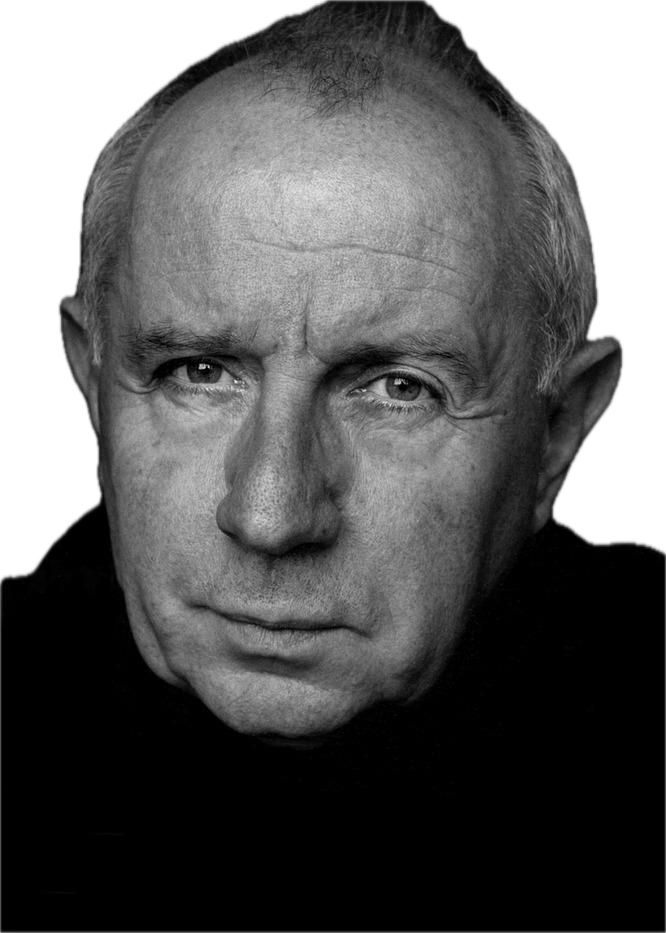
«I am not at all a devotee of speed. When I say that I am an enemy of speed, I am, of course, an enemy of technical speed, that is to say, of this race toward the end, toward ubiquity.»
Paul Virilio
In 1977, Paul Virilio wrote Speed and Politics: An Essay on Dromology. Dromology, a notion derived from the conjunction of the Greek words dromos, the race, and logos, the science. A philosopher of speed and a theorist of architecture and urbanism, Paul Virilio structured his thinking around a critique of the tyranny of speed, which leads to perceiving the world in terms of instantaneity.
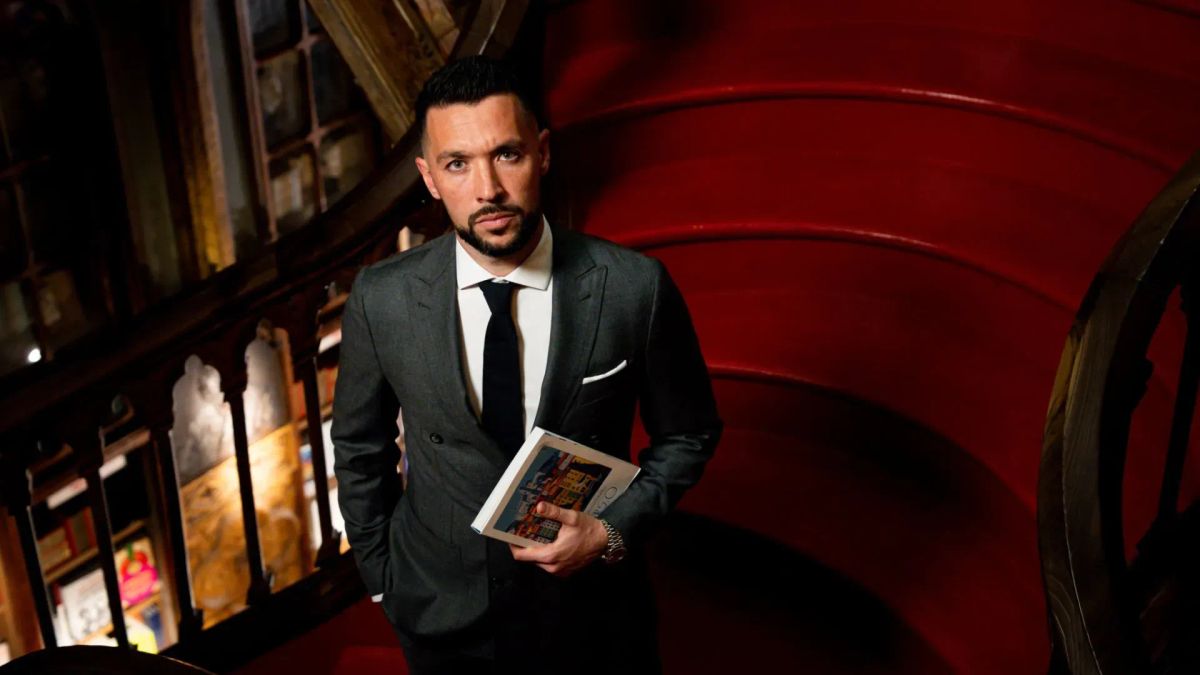
Observable socially, this tyranny of speed could also be applied to football. Players run more, faster, and for longer, and not a single press conference takes place without the word “intensity” being uttered by the coach. In matches where speed has become king, one man, however, seems determined to slow down football’s dromology. And it is perhaps no coincidence that this 36-year-old Italian, like Paul Virilio, is a student of philosophy. The author of a thesis entitled Philosophy of the Game: The Aesthetics of Football and the Role of the Goalkeeper (2013), Francesco Farioli stands out both for his atypical path and for a conceptualisation of the game structured around a central notion: rhythm. Then coach of OGC Nice and criticised for the slowness of his team’s play, Francesco Farioli explained to the newspaper L’Équipe his desire to control the tempo of a match by acting on the speed of possession:

«We want to have control of the game. But we cannot go at 1000 miles per hour all the time, so we work on variations in rhythm. What we try to do is not to move the ball, but to move the opponent through the movements of the ball.»
Francesco Farioli
To implement these variations of rhythm on the pitch, the current FC Porto coach has made pausa a structuring concept of his playing philosophy. Pausa is the act of literally putting the game on pause in order to slow down the tempo before accelerating it again through a pass, a dribble, or a carry. All capable of identifying the moments when time must be suspended, the most faithful apostles of pausa are former genius number 10s such as Juan Román Riquelme or Pablo Aimar, or more or less advanced playmakers such as Sergio Busquets, Frenkie De Jong, Pedri, Xavi, Andrés Iniesta or David Silva (Lionel Messi being in a category of his own).
Pausa, toco y me voy (pass and move), tabela (one-two): the relational magic of Juan Román Riquelme
Stopping to create better: Pablo Aimar and the nutmeg
Perfectly highlighted by The Purist in his video “Pedri and De Jong — Why synergies beat systems,” the pausa practiced by the two Barcelona midfielders is a vector of freedom and autonomy and brings about spontaneous connections between Hansi Flick’s players.
As we can see, pausa is individually associated with artists of the game who interpret time in order to better attack space. But in Francesco Farioli’s teams, pausa is no longer the sole preserve of the aesthete and must be understood in a collective sense. It is no longer the playmaker who stops time, but the entire team that freezes itself. And this is the full originality of the Italian coach: transforming a technical gesture into a tactical concept that becomes a shared reference for all players. In these moments of general stillness, pausa is very often carried out through the use of the sole by the centre-backs.
Mentor of Francesco Farioli and accustomed to these sequences since his time at Sassuolo, Roberto De Zerbi explains that the use of the sole should not be reduced to aesthetic considerations but rather understood in its tactical dimension. By placing the ball under their sole, Farioli’s centre-backs indeed invite the opponent to press them, because:

«Unconsciously, when a player sees his opponent with the ball under the sole, he presses more aggressively.»
Roberto De Zerbi
Playing on impatience and passivity in order to better lure and attract the press—such is the trap set by temporisation in order, ultimately, to open and exploit spaces. In the previously cited interview, Francesco Farioli describes this relationship between time and space, once again linking it to the rhythm of play:

«We must know how to read the space that the opponent leaves us. For that, we need patience in ball circulation, and to see when the door opens, because there is only a fraction of a second before it closes again. We must identify the right moment to change rhythm.»
Francesco Farioli
If pausa serves to play with rhythm in order to better control it, the words of the Porto coach show that it is also a question of timing. A moment of perception and identification of space that must be seized so that the transition from stillness to speed becomes all the more brutal and destructive. Francesco Farioli thus brings us back to Paul Virilio, whose philosophy is based on speed as a destructive concept. It is speed that connects time and space, and it is what allows imbalance, what causes damage. Calm before the storm, pausa is a slow breath that suspends time in order to set it back in motion through the speed of a pass or a dribble.
By placing his sole on the ball, Nehuén Pérez freezes all of his teammates for a moment. Like in a game of “Red Light, Green Light,” Porto’s players collectively come to a stop. Once space opens up, Luuk de Jong drops deeper to allow the Argentine defender to break the opponent’s first line of pressure and penetrate centrally through a vertical pass. Like a child suddenly running again to touch the wall and win the game, Alan Varela sharply resumes his movement as soon as the pass is played in order to act as the third man. This change of rhythm then allows Porto’s players to eliminate six Sporting Portugal players in two passes and subsequently create a dangerous situation. As facets of pausa, total stillness and the management of speed thus seem to turn it into a simple children’s game. Footage from Liga Portugal Betclic — used for educational purposes only
With Francesco Farioli, pausa is therefore inseparable from two fundamental principles of positional play: triangular play and the search for the third man. After slowing the rhythm, the centre-backs seek to regain speed through triangulation aimed at finding the third man facing play. The practical implementation of pausa thus takes place within a positional structure in which the same passing circuits are repeated and automatised. And it is precisely on this point that the criticism of “Farioli Ball” is perhaps the most relevant, since repetition and automatisation often end up rhyming with predictability. Yet, it is not the practice of pausa as such that contributes to mechanising Farioli’s teams, but rather the rigidity of the positional structure imposed by the Italian coach. The variations of rhythm and tempo made possible by pausa would certainly be even more devastating if they were accompanied by greater freedom of movement, favouring interactions, combinations, and the search for diagonality. The strength of the ball carrier’s stillness is all the greater when the movement of his teammates is fluid and dynamic. To de-structure in order to combine—an idea that makes even more sense given that the former Nice coach’s playing philosophy is already based on, and implements, two fundamental concepts of relationism: proximity between players in possession of the ball and the desire to break through the central axis by playing through the opponent’s block.
Dante slows the tempo to the point of coming to a complete stop in order to attract the opponent’s pressure and allow Lotomba to move inside. We then observe the high central density of the Nice players, with eight players positioned inside and all located close to one another. Dante’s pausa and Lotomba’s movement then become the two collective signals to re-accelerate the rhythm. By also moving inside, Diop can combine with Ndayishimiye before making a run behind the Montpellier defence and delivering a dangerous cross. Tabela and toco y me voy thus combine with a pausathat takes place within a positional structure which becomes relationally hybridised through interactions and mobility, thereby gaining dynamism and unpredictability. To speak in the terms of Gilles Deleuze and Félix Guattari, striated space becomes smoother, and being fades in favour of becoming.
Within the Farioli system, however, pausa operates as a truly human concept, as it acts as the trigger for non-verbal communication between players. When Todibo, Dante, Bednarek, Kiwior or Thiago Silva decide to freeze time, they send a signal to their teammates, and this signal is then collectively perceived. Pausa thus makes Farioli’s players speak the same language and establishes connections between them that are impossible to objectify, which perhaps explains why opponents continue to struggle to counter the Italian coach’s plans. It is also the reason why these synergies would benefit from being strengthened through a more relational approach, in which associations and combinations could emerge even more—and above all, more naturally.
If, as Jérôme Lèbre says, Francesco Farioli’s teams Praise Immobility (2018) because they fix and hold their positions, they at the same time elevate pausa as an act of resistance against a football subjected to the dromological imperative. By stopping time, Farioli’s players refuse to obey the tyranny of speed. But to free themselves completely from its chains, the key may lie in an intuitive return to movement, in order to re-anchor pausa within its relational dynamic between teammates, time, and space.
Paul Mallet is a U12 coach at AC Boulogne-Billancourt, a historic youth academy club in the Paris region. Alongside his coaching role, he works as a football tactics analyst and writer. He is also pursuing a Master’s degree in Political Science, focusing on the intersection between football and public policy. Follow Paul on LinkedIn