From Automation to Self-Organisation: Embracing Uncertainty

By Paul Mallet
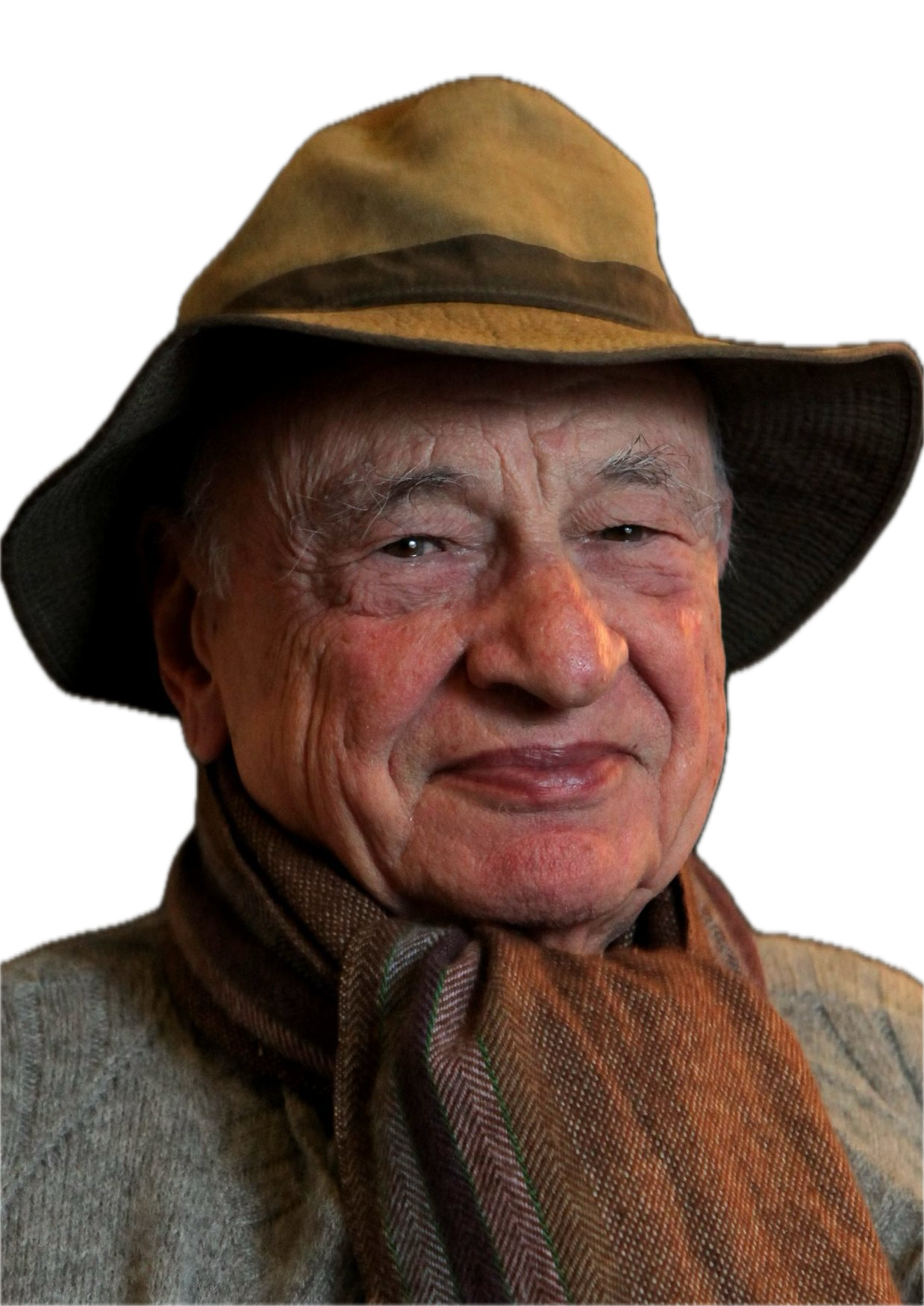
«Complexity includes not only quantities of units and interactions that defy our capacity for calculation; it also includes uncertainties, indeterminacies, random phenomena. […] But complexity cannot be reduced to uncertainty — it is uncertainty within richly organised systems. […] Complexity is therefore linked to a certain blend of order and disorder.»
Edgar Morin
With his Introduction à la pensée complexe (1990), Edgar Morin proposes a shift in the foundational reasoning upon which Western science was built. Since Descartes, Western science has paradoxically separated subject from object by postulating that objects exist independently of the subject and can thus be observed and explained as they are. The subject is therefore a “noise” that must be eliminated in order to reach objective, scientific knowledge of things. By excluding two notions that are nonetheless inseparable from one another, Western science takes the form of a paradigm of simplicity — one built on closed entities that separates what is connected. Within this perfectly ordered, deterministic machine, the notion of uncertainty is necessarily cast to the side of the anti-scientific. By emphasising that “we cannot escape a generalised principle of uncertainty,” Edgar Morin lays the foundations of a new paradigm of complexity. Once closed and antagonistic, subject and object, order and disorder, are now linked — at once contradictory and complementary. Within this framework, uncertainty becomes an integral part of complex organisations and can no longer be ignored by the observer.
Yet in football, uncertainty remains a word that continues to frighten many coaches. Even if it may seem obvious, it is worth remembering that a football match is an intrinsically uncertain phenomenon. Its final result cannot be known in advance, a game situation never repeats itself identically, and the unpredictable (injury, red card, penalty) can emerge at any moment. But rather than accepting it for what it is, some coaches see uncertainty as a threat to their desire for control. Inseparable from positional play, this obsession with control leads coaches like Mikel Arteta or Enzo Maresca to want to reduce uncertainty to a minimum — or even, utopically, to hope to eliminate it entirely. To do so, Arteta and Maresca establish the notion of structure as a cardinal principle that must never be departed from. In the minds of the two former Pep Guardiola assistants, their team’s positional structure is the immovable framework that players must respect in order to take control of the match. Based on a zonal and rational occupation of space in possession, this structure places players within an organisation that aims to be extremely ordered. Insofar as it seeks to place players in familiar game situations, positional structure is therefore the starting point of the logic of reducing and eliminating uncertainty.
In pursuit of suppressing uncertainty, coaches like Antonio Conte, Roberto De Zerbi, or Francesco Farioli seek to create automatisms within their positional structure. In Antonio Conte’s teams, automatisms are often visible through the repetition of a single game sequence: a pass from a centre-back to a wing-back/winger who, thanks to his inverted-foot positioning, finds the striker (Romelu Lukaku) with a slightly curved diagonal pass, before the striker attacks the depth or lays the ball off for a midfielder arriving in a third-man situation. With Roberto De Zerbi, automatization relies essentially on a succession of third-man combinations enabled by a meticulously calibrated manipulation of space and time. Inscribed within a collective pausa that plays on variations of rhythm and speed, the search for the third man through vertical triangle play is also a central automatism in Francesco Farioli’s positional game.
As in his Brighton days, Roberto De Zerbi uses a 4–2–2–2 positional structure to build out against Paris FC. The proximity between the centre-backs and Marseille’s double pivot draws the opposition’s press, while the positioning of Gouiri and Aubameyang in the half-spaces serves to pin the Parisian centre-backs. By holding the width, Greenwood and Weah stretch the Paris FC defence. Attracted, pinned, and stretched, the Paris FC players must manage the void created by Marseille’s positional structure in midfield. Balerdi’s first pass to Rulli activates the build-up programme established by the Italian coach: Murillo attacks depth, Aubameyang draws his marker into the axial no man’s land, and Greenwood tucks inside to attack the space vacated by the Gabonese international’s underlapping run.
By placing the ball under his sole, Nehuén Pérez freezes all his teammates for a brief moment. Acting as a form of non-verbal communication between players, the pausa is the trigger for the automated passing circuit within FC Porto’s positional structure. Once the space opens up, Luke De Jong drops deep to allow the Argentine defender to break the first line of pressure and penetrate through the axis with a vertical pass. Alan Varela then abruptly accelerates as soon as the pass is played, acting as the third man. Playing on rhythm and speed, this triangular combination allows Porto’s players to eliminate six Sporting Portugal players in two passes before creating a dangerous situation.
Positional automatisms therefore consist in the reproduction and repetition of predetermined game circuits that associate, within a logic of rationalisation, the reduction of uncertainty with efficiency. Taking control of the match amounts to eliminating randomness by imposing a positional structure that allows players to mechanically execute tactical routines. Following the distinction established by Edgar Morin, positional automatisms resemble programmes far more than strategies. For the thinker of complexity, the notion of strategy is indeed opposed to that of programme. Strategy allows for the elaboration of one or more scenarios by taking account of random situations and preparing, from the outset, to integrate the new and the unexpected in order to enrich and modify one’s action. A programme, by contrast, is a predetermined sequence of actions that must function under circumstances that allow for its completion. If those circumstances are not favourable, the programme stops or fails. Conceptualised in this way by Edgar Morin, the distinction between strategy and programme seems to be validated by empirical experience, as confirmed by Enzo Maresca’s comments following Chelsea’s 1–2 defeat to Sunderland on 25 October:

“I watched nine Sunderland games before ours — they never started with a back five. So I prepared to face a back four. Then they started a back five against us. In the changing room, before the players go out for a warm up, I need to tell the players : ‘Guys, all the Sunderland preparation, put in the rubbish.’ And in ten minutes I need to change our plan. This is difficult or the players.”
Enzo Maresca
By envisioning only the scenario of a back four, Enzo Maresca did not prepare his players to collectively implement a strategy capable of adapting. He programmed them instead to execute a set of pre-established actions designed to counter Sunderland’s back four. But since the conditions were not met, the programme could not even be launched, and a new one had to be improvised in a hurry. Indeed, the numerical superiority conferred by the rational occupation of the five positional channels was nullified by the individual marking of a back five. The inability to conceive of attacking in anything other than a zonal manner inevitably caused the positional matrix to crash. As Edgar Morin explains, “a strategy, to be carried out by an organisation, requires that the organisation not be designed to obey programming.” Insofar as Enzo Maresca appears to have no intention of stepping outside the zonal and positional paradigm, the unexpected and the random are perceived and act negatively as disruptors of order and control. Chelsea’s tactical organisation thus resembles a programmable machine far more than a system capable of turning uncertainty to its advantage.
While they can be tremendously effective when well executed — and should by no means be discarded entirely — automatisms no longer really make sense when they are programmed to be the sole tactical response to uncertainty. Embedded within a positional structure that must never be called into question, they contribute to sustaining a double myth: that of absolute control and the total elimination of uncertainty. And beyond becoming increasingly predictable for the opposition, they lead players to execute without thinking and prevent them from developing an awareness of themselves and their environment. Yet it is precisely the relationship with the environment that allows a tactical system to become intelligible. The animation of a tactical system is a set of interactions between players within the same team, but also with those of the opponent. For it to come alive, the tactical system must necessarily open itself up to its environment. And it is through this opening that it can then structure and organise itself. By over-programming and over-automating, coaches like Mikel Arteta or Enzo Maresca prevent the opening of their positional game, sealing it within a closed system governed by the notion of order.
Other coaches, such as Luis Enrique or Vincent Kompany, instead reduce the rigidity of their positional structure to place the notions of interaction and movement back at the centre of their game. Still present, the positional structure is no longer closed in on itself. Open to its environment, it now fully accounts for the intrinsic uncertainty of the game. Since the random is no longer merely a negative factor to be reduced but also an opportunity to be seized, the positional structure of PSG or Bayern Munich can then order and organise itself through disorder and disorganisation. For, as Edgar Morin explains, “we observe empirically that disordered phenomena are necessary, under certain conditions and in certain cases, for the production of organised phenomena, which in turn contribute to the increase of order.” More strategists than programmers, Luis Enrique and Vincent Kompany allow their players to literally play with uncertainty and to integrate chaos as a vector of organisation.
This possession sequence, concluded by Dembélé’s shot against the post, illustrates the fluidity of Paris’s positional structure. At the start of the build-up, Luis Enrique’s players adopt a relatively conventional 4–3–3 shape, with wide high wingers to stretch Chelsea’s defence. Two things are worth noting: the low positioning and proximity of the three Parisian midfielders, which attracts the Blues’ press, and Dembélé’s between-the-lines positioning, which places Wesley Fofana in a situation of discomfort. Vitinha then becomes the symbol of the mixture of order and disorder within PSG’s positional structure. Positioned in his role as a deep-lying playmaker at the start of the build-up, Vitinha bursts forward and attacks the space left in behind Chelsea’s defensive line, enabled by the overlapping and underlapping runs of Dembélé and Barcola. Having moved into a centre-forward position, the Portuguese international then drifts across the full width of the pitch to organise play first on the right, then on the left. Similarly, Doué, Dembélé, and Barcola vacate their starting positions to combine in close proximity to one another. By orienting themselves towards the ball carrier rather than towards the rational occupation of space, the Parisian players are no longer operating within an imposed positional structure but are bringing forth, through their disorganisation, a self-organised order.
This impressive possession sequence from Bayern Munich against Atalanta perfectly illustrates how Vincent Kompany’s players disorganise themselves in order to better self-organise. Nominally a right winger, Michael Olise occupies a left-back position at the start of the sequence, then moves into the heart of the game, before finally returning to his right flank to deliver a magnificent lofted pass for Nicolas Jackson at the end of the move. But this freedom of movement is not unique to the French international — it applies to all the Bavarian players. Full-backs Josip Stanisic and Konrad Laimer vacate their flanks to occupy the half-spaces and even find themselves among the most advanced players on the pitch. Joshua Kimmich and Aleksandar Pavlovic alternate — or simultaneously act — as centre-backs who dictate the tempo and organise play from a deep position. The perpetual movement causes the Munich players to constantly connect with one another, bringing forth, through this flux of interactions, an organised chaos that totally dismantles Atalanta’s all-over man-marking.
Other teams have followed or continue to follow this logic of complexity. Thiago Motta’s Bologna and Simone Inzaghi’s Inter Milan relied, for example, on a dynamic occupation of space and incessant positional rotations to disrupt opposition man-marking — notably through the insertion of centre-backs into midfield (Beukema, Calafiori, De Vrij), overlapping runs (Bastoni), or forward projections (Pavard). Characterised by the flexibility of their positional structure, Xabi Alonso’s Bayer Leverkusen and Cesc Fàbregas’s Como combine positions and relationships to enable an associative style of play built around the free expression of their playmaker (Florian Wirtz and Nico Paz). Under the guidance of Kjetil Knutsen and Karl Maris Aksum, Bodø/Glimt and Mjällby pushed the relational logic even further. With players who vacate their positions to combine centrally through their proximity and a succession of one-twos, these Scandinavian clubs showed that strong results in the Champions League do not necessarily go hand in hand with a strictly zonal attack. By winning the title, the Swedes also highlighted the tactical effectiveness of a apositional style of play that, through tilting, perpetual movement, and the pursuit of diagonality, prioritises interactions between players.
By no longer making space the primary reference point of the game, these hybrid teams associate order and disorder in a relationship of complementarity. In a universe of pure order, there can be no innovation or creation. Logically, free and inventive spirits like Jack Grealish or Eberechi Eze have been — or remain — severely constrained in their expression. In an organisation that opens itself up to disorder, the creativity and unpredictability of an Ousmane Dembélé or a Michael Olise have, instead, almost infinite possibilities. And it is precisely here that the relationship between disorganisation and self-organisation resides. By becoming more fluid, the positional structure disorganises itself — and it is this very disorganisation that then allows it to reorganise and reorder itself from within.
That said, the self-organised positional structure is not devoid of automatisms. Triangulations, third-man play, and the search for the free player remain indispensable principles applied through automatisms. But the logic of programming is no longer exclusive. It enters into dialogue with a strategic approach that integrates uncertainty, enabling players to adapt to what the environment offers. The positional structure is no longer subordinated to the injunction of absolute control and the elimination of uncertainty. Being at once automated and aleatory, it now seeks to reduce uncertainty by attempting to exploit the opportunities that uncertainty itself provides. The self-organisation processes of the Parisian, Bavarian, and Scandinavian systems demonstrate that it is possible to attack while stepping outside a strictly zonal and positional approach. By combining functions and positions, these self-organised orders permit asymmetry. But by making intuition the complement of rationality, they also bring about a transformation of the notion of balance. Whereas balance tends to conflate with order in a programmed positional game, here it becomes the meeting point between order and chaos. This mixture of order and disorder bears witness to the shift in perspective that is beginning to emerge in the way structure itself is conceived. When it opens itself up to its environment, the self-organised positional structure is no longer merely imposed a priori by the coach. By integrating and making use of uncertainty, it increasingly tends to emerge within and through the relationships, interactions, and connections between players.
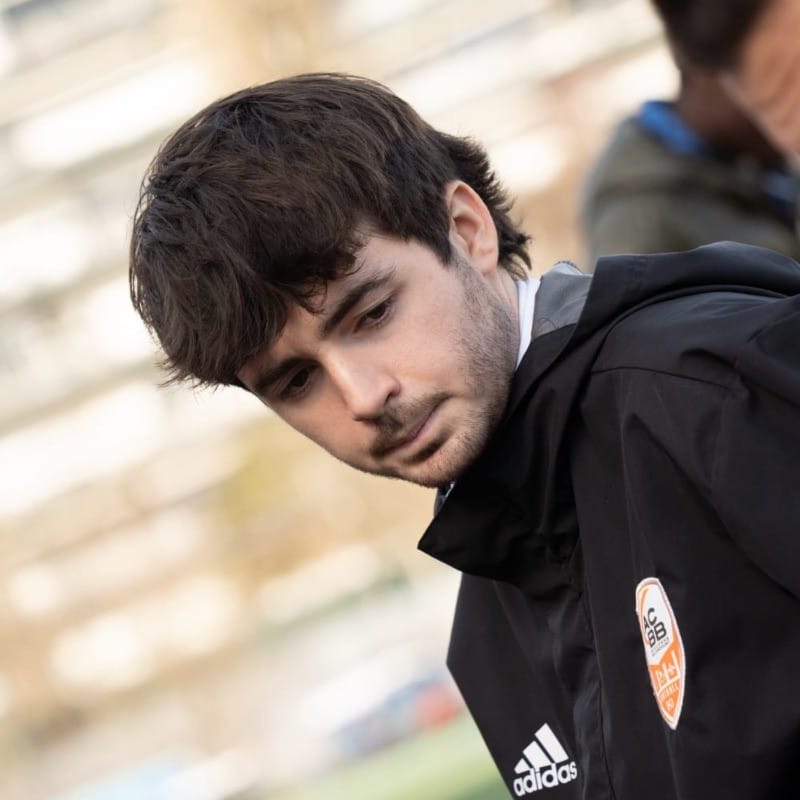
Paul Mallet is a U12 coach at AC Boulogne-Billancourt, a historic youth academy club in the Paris region. Alongside his coaching role, he works as a football tactics analyst and writer. He is also pursuing a Master’s degree in Political Science, focusing on the intersection between football and public policy. Follow Paul on LinkedIn